
 Save to Pinterest
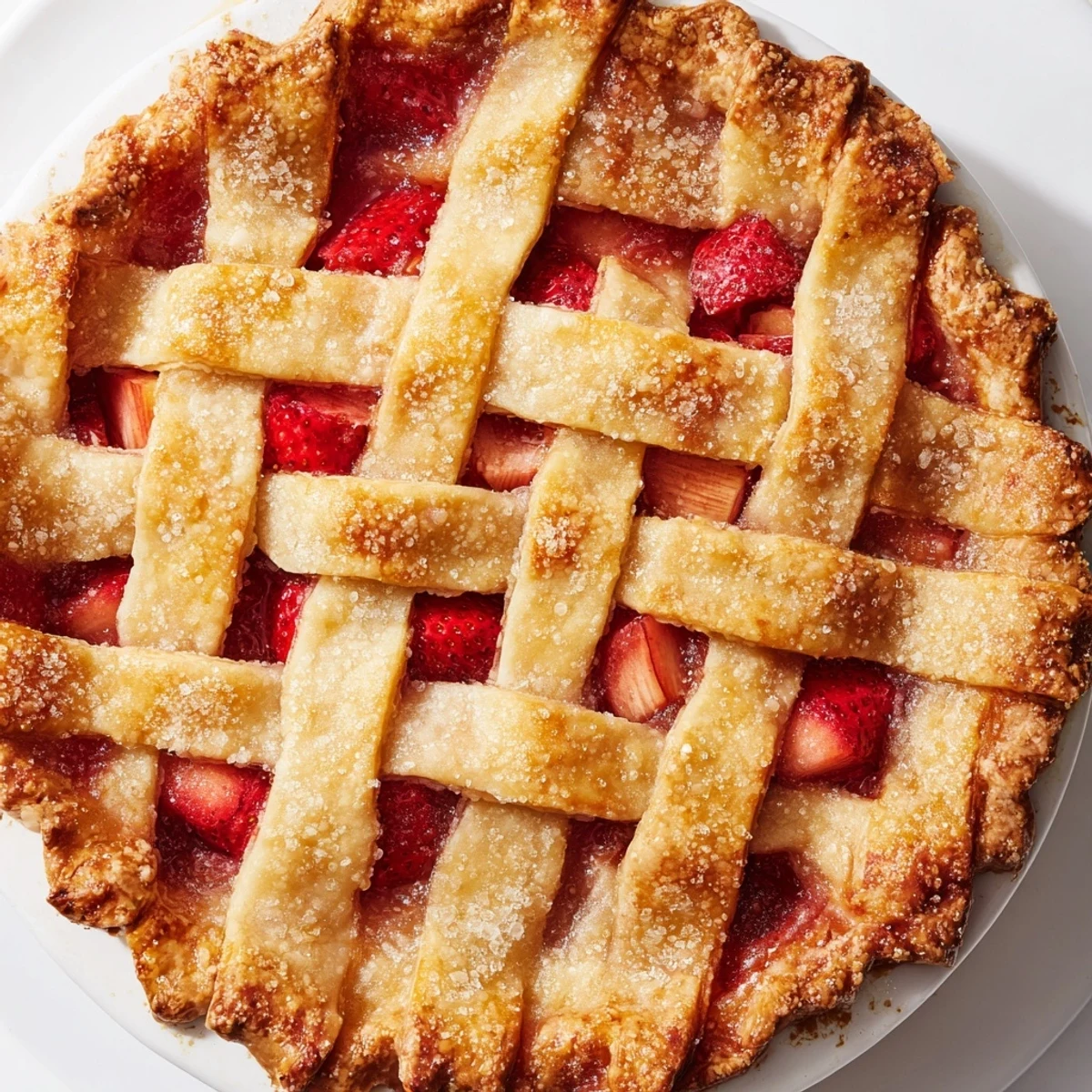
 This pie combines fresh strawberries and tart rhubarb into a luscious filling that's balanced with sugar, vanilla, and lemon juice. The crust is made from a cold butter and flour dough, rolled into two disks and chilled to maintain flakiness. After filling one crust and weaving the second into a beautiful lattice, the pie is baked until golden brown and bubbling. Let it cool fully to set the filling before slicing. Ideal with a scoop of vanilla ice cream or whipped cream for added indulgence.
The smell of strawberries and rhubarb hitting hot butter crust can stop conversation mid sentence. I learned this three summers ago when my neighbor appeared at my screen door holding a paper bag of rhubarb cut from her backyard, the stalks still damp from her hose. She did not knock. She simply said, You know what to do with this, and left before I could protest that I absolutely did not.
I made this pie for my brother's birthday that same summer, convinced the lattice would collapse or the bottom would sog through. Instead he ate two slices standing at the counter, fork in one hand, phone in the other, not speaking, which from him counts as a five star review.
Ingredients
- All purpose flour: The backbone of any decent crust, and I have learned that cheap flour works fine here so long as you keep it cold.
- Unsalted butter: Cold enough that your fingers hurt holding it, cut into cubes that will shatter into layers as they hit the oven.
- Ice water: The amount varies with humidity, so start with six tablespoons and add only if the dough still looks sandy.
- Strawberries: Ripe but still firm, sliced thick enough that they do not dissolve into mush during baking.
- Rhubarb: The pinker stalks look prettier but the green ones taste identical, so take what you can find.
- Cornstarch: This prevents the dreaded soup bottom, though I once used too much and the filling turned rubbery, so measure carefully.
- Lemon juice: Wakes everything up without announcing itself.
- Egg: Beaten with a fork until no streaks remain, this is what gives the lattice that professional sheen.
- Coarse sugar: Optional but the crunch against flaky pastry feels worth the extra step.
Instructions
- Make the crust:
- Whisk flour, salt, and sugar together, then work in the cold butter quickly so it does not warm in your hands. Drizzle ice water while tossing with a fork until the dough just holds together when squeezed.
- Chill thoroughly:
- Divide and wrap the disks, then walk away for at least an hour, longer if your kitchen runs warm. This rest relaxes the gluten and firms the butter.
- Macerate the fruit:
- Toss strawberries and rhubarb with sugar, cornstarch, vanilla, lemon, and salt, then let sit until juices pool at the bottom of the bowl. This step is not optional.
- Line the dish:
- Roll one disk large enough to drape over the edges, then ease it in without stretching, which causes shrinkage later.
- Fill and weave:
- Pile the fruit high, it will settle, then lay half your strips across, fold back every other one, and weave the perpendicular strips through. Repeat, alternating which strips you fold back.
- Finish and bake hot:
- Crimp, brush with egg wash, sprinkle sugar, and bake at four hundred degrees to set the structure before lowering heat to finish gently.
- Cool completely:
- The hardest part. The filling needs hours to gel properly, so resist cutting early or you will have a runny mess and no one to blame but yourself.
 Save to Pinterest
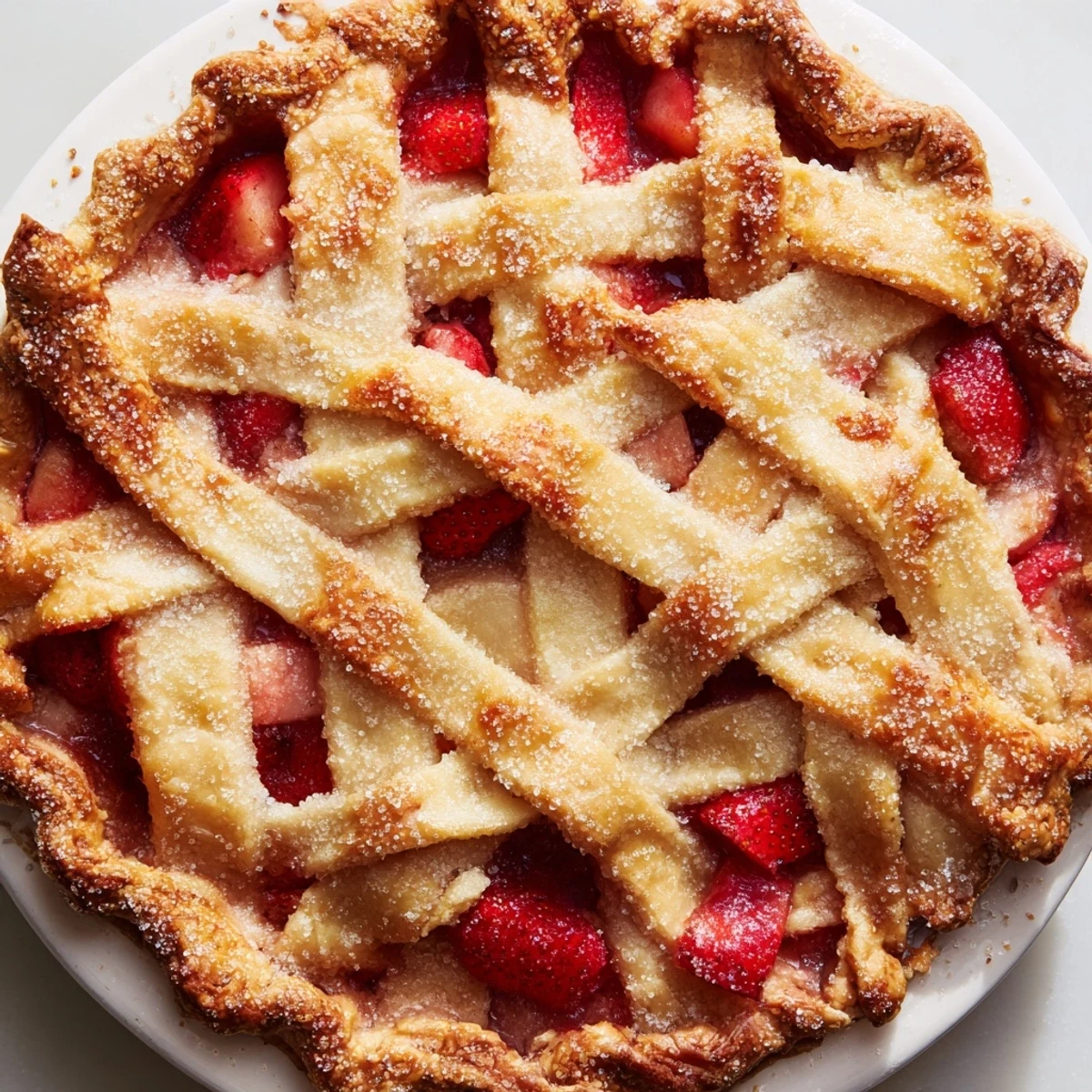
 Last June I brought this to a potluck where a woman I had never met took one bite and told me about her grandmother's rhubarb patch in Minnesota, how she would steal stalks as a child and dip them in sugar until her mother caught her. We talked for twenty minutes. I never got her name. The pie was gone before I went back for seconds.
What to Listen For
The filling makes a specific sound when it is ready, a thick glugging bubble that repeats slowly rather than the frantic boiling of early baking. I started trusting my ears after too many underdone centers.
The Waiting Game
I have tried rushing the cooling and regretted it every time. Now I bake in the morning and let the pie sit on a wire rack through dinner, which also means the first slice happens at the perfect temperature, barely warm, with ice cream melting just slightly on contact.
Serving and Storing
A sharp knife wiped clean between cuts keeps the slices neat, and leftovers wrapped loosely in foil stay crisp better than sealed containers which trap moisture and ruin the bottom crust.
- Reheat individual slices in a three hundred degree oven for ten minutes to restore flakiness.
- The pie keeps at room temperature for two days, after which the fruit weeps and the crust softens.
- Frozen baked slices wrapped well taste surprisingly good thawed, though the texture shifts slightly.
 Save to Pinterest
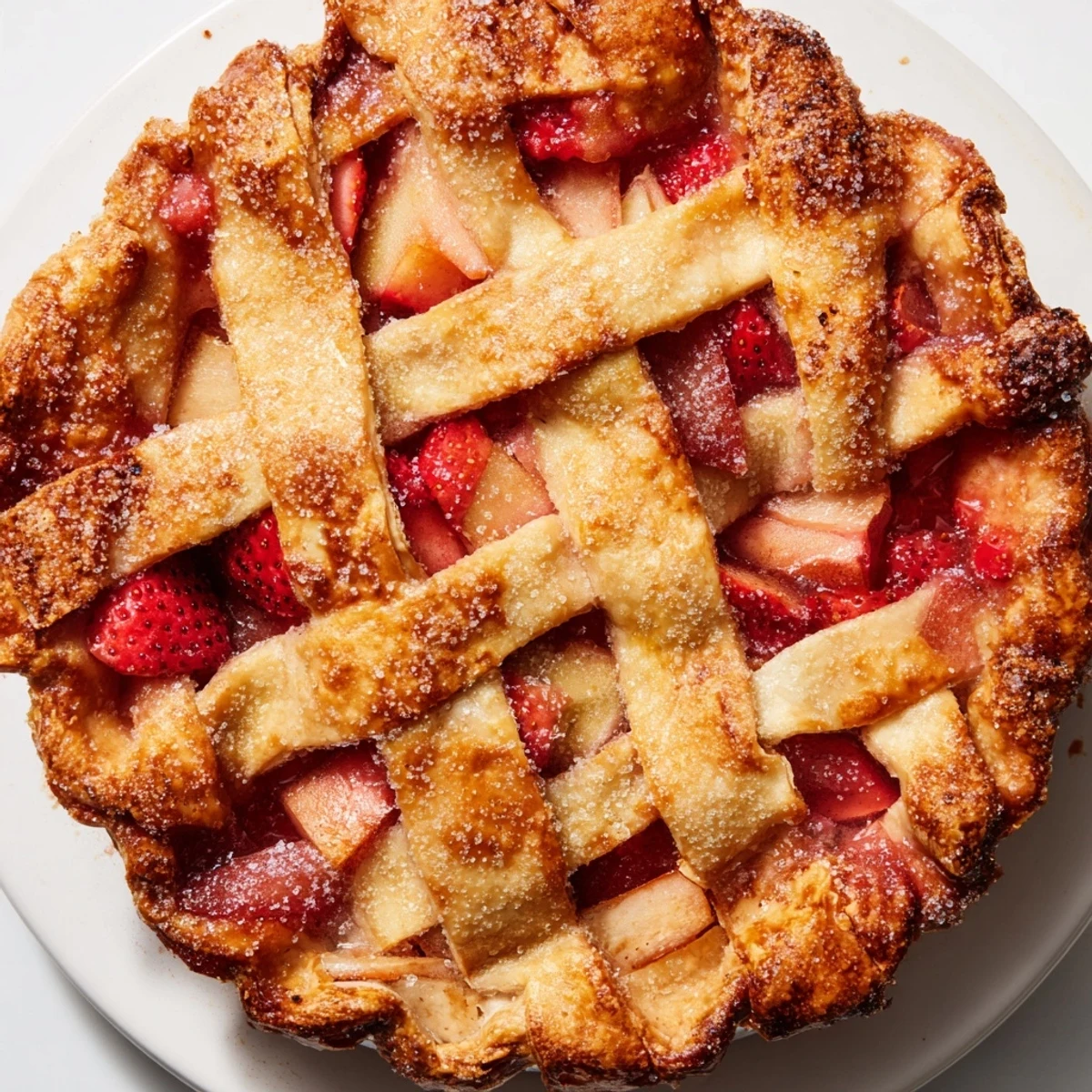
 However this pie finds you, whether through a neighbor's generosity or your own stubborn curiosity, it rewards patience more than skill. The first slice may wobble, the lattice may gap, but the taste carries no memory of imperfection.
Recipe FAQs
- → What type of crust is best for this pie?
-
A cold butter-based flaky crust works best to create a tender and crisp lattice topping that holds the filling well.
- → Can I use frozen strawberries and rhubarb?
-
Yes, but thaw and drain excess liquid before mixing to prevent a soggy filling.
- → How do I prevent the lattice crust from browning too quickly?
-
Cover the edges with foil partway through baking to avoid over-browning while allowing the center to bake fully.
- → What flavors complement the strawberry and rhubarb filling?
-
Adding a pinch of ground ginger or cinnamon enhances the tartness and sweetness of the filling.
- → How should the pie be cooled before serving?
-
Allow the pie to cool completely so the filling sets and slices cleanly, preserving the crust's crispness.