
 Save to Pinterest
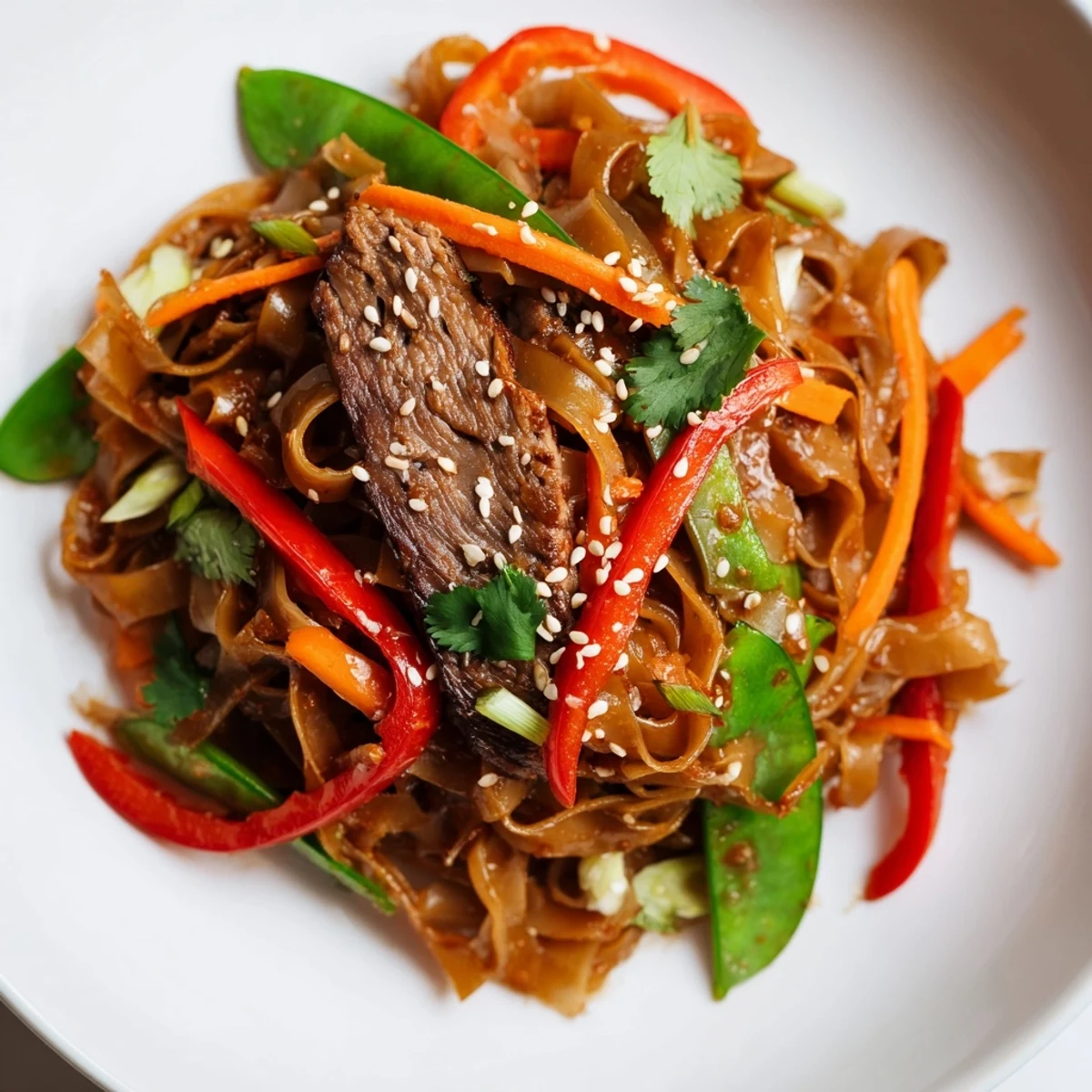
 This dish features thinly sliced flank steak marinated in soy and oyster sauces before searing to lock in flavor. Wide rice noodles cook to tender perfection and are combined with stir-fried red bell pepper, carrot, snow peas, garlic, ginger, and spring onions. A spicy sauce made from chili garlic sauce, soy sauces, brown sugar, and vinegar is tossed with all components, finishing with toasted sesame seeds and fresh herbs for a vibrant, satisfying meal perfect for weeknight dinners.
There's something about the sizzle of beef hitting a screaming hot wok that makes you feel like you actually know what you're doing in the kitchen. I learned that lesson one Tuesday night when a craving for something bold and spicy sent me digging through my pantry, armed with nothing but determination and a half-empty bottle of chili garlic sauce. What emerged was this dish—tender beef, chewy noodles, vegetables that still had snap to them, all tangled together in a sauce that's equal parts savory and kick. Now it's become my go-to when I need dinner on the table fast but don't want to compromise on flavor.
I made this for my roommate once when she came home exhausted from a double shift, and watching her face light up after that first bite reminded me why cooking for people matters. She asked for the recipe the next day, and I realized then that the best meals are the ones that taste like care, not obligation.
Ingredients
- Flank steak or sirloin (400g), thinly sliced: Slicing against the grain makes all the difference for tenderness—sharp knife and a steady hand are your friends here.
- Soy sauce (3 tbsp): This is your umami backbone, the quiet anchor that makes everything taste more like itself.
- Dark soy sauce (2 tbsp): Use it for depth and that rich brown color, not just seasoning.
- Chili garlic sauce (2 tbsp, adjust to taste): This is where the personality lives—taste as you go and dial it up or down based on your heat tolerance.
- Rice noodles or egg noodles (300g): Either works beautifully; just don't overcook them since they'll soften slightly when tossed with the hot sauce.
- Brown sugar (2 tsp): A small amount cuts through the heat and balances the salt, creating harmony instead of a one-note burn.
- Rice vinegar (1 tbsp): The acid brightens everything and keeps the sauce from tasting flat.
- Oyster sauce, sesame oil, cornstarch (beef marinade): Together, these create a glossy coating on the beef and help it stay tender.
- Red bell pepper, carrot, snow peas (vegetables): Mix and match textures here—some vegetables should finish with bite, others soft, all contributing different notes.
- Garlic, ginger, spring onions (aromatics): These three are doing the heavy lifting flavor-wise; don't skip them or rush them.
- Vegetable oil (2 tbsp): High heat cooking demands an oil with a high smoke point—peanut or vegetable oil handles the wok's intensity better than olive oil.
- Toasted sesame seeds, cilantro, lime (garnish): These aren't just pretty finishes—they add freshness and a final layer of flavor that makes the dish feel complete.
Instructions
- Marinate the beef:
- Toss your sliced beef with soy sauce, oyster sauce, cornstarch, sesame oil, and black pepper, then give it at least 15 minutes to relax and absorb those flavors. This is when the cornstarch starts coating each slice, and the beef will turn glossy and promising.
- Prepare the noodles:
- Cook them according to package directions, but pull them out just shy of completely tender—they'll soften more when you toss them with the hot sauce and beef. A quick cold-water rinse prevents them from sticking to each other.
- Build your sauce:
- Whisk together soy sauce, dark soy sauce, chili garlic sauce, brown sugar, and rice vinegar in a small bowl, tasting as you go. This is your moment to adjust heat levels before everything hits the wok.
- Sear the beef:
- Heat oil until it shimmers, then lay the beef flat in a single layer and don't touch it for 1 to 2 minutes—you want that golden crust, not scrambled beef. The color deepens, the edges curl slightly, and you'll smell that savory, slightly charred aroma that means you're on the right track.
- Wake up the aromatics:
- Add fresh oil, then garlic, ginger, and the white parts of spring onion, stirring constantly for about 30 seconds until the smell hits you like a warm breeze. This is where your kitchen starts smelling like dinner.
- Cook the vegetables:
- Bell pepper, carrot, and snow peas go in next, tossed over high heat for 2 to 3 minutes until they're tender but still crisp. Watch them change color slightly and listen for that light crackling sound that means they're cooking, not steaming.
- Bring it all together:
- Return the beef to the wok, add your noodles, pour in the sauce, and toss everything over high heat for 2 to 3 minutes until every strand is glossy and coated. It comes together almost suddenly, transforming from separate ingredients into a single, unified dish.
- Finish with flourish:
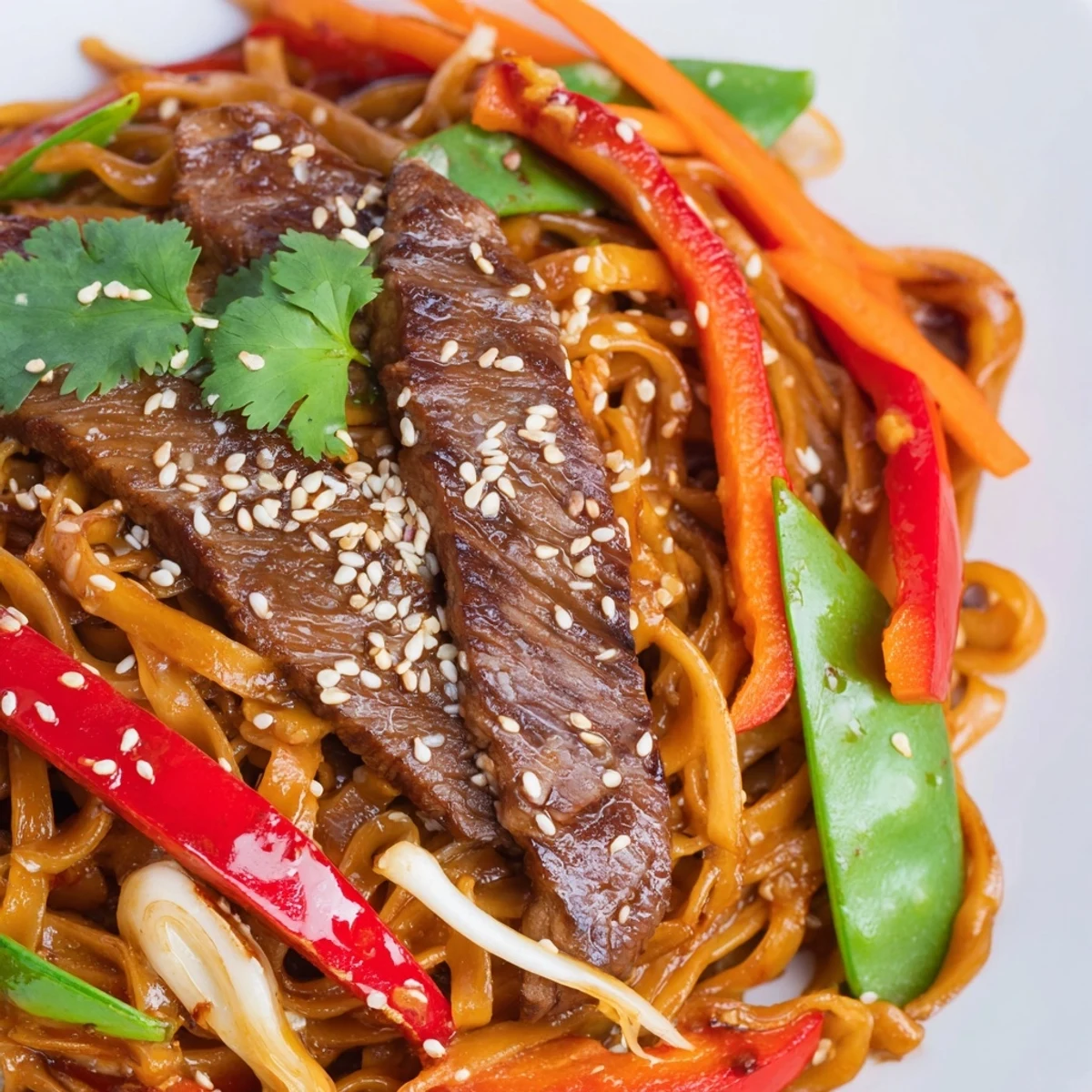
- Remove from heat and scatter spring onion greens, sesame seeds, and cilantro on top, finishing with lime wedges on the side. These final touches add brightness and a subtle crunch that makes each bite feel intentional.
 Save to Pinterest
 The first time someone told me this tasted like takeout but somehow better, I understood what I'd been chasing all along—that moment when homemade food stops trying to imitate something else and becomes exactly what it's meant to be. That's when I knew this recipe had earned its place in regular rotation.
The Heat is Your Control
Spice is personal, and this dish knows that. The chili garlic sauce is the dial you turn, not the only voice in the room. Start with 2 tablespoons, taste it before finishing, and add more if you want to push the burn. I've made this for friends who think jalapeños are extreme and for people who live in the hot end of the spectrum, and small adjustments to that sauce make everyone happy. The other flavors—the sweetness of the brown sugar, the brightness of the vinegar, the umami of the soy sauces—they're all still there either way, which is what makes this dish so forgiving.
Beef Slicing: The Difference Between Good and Tender
The way you slice your beef changes everything, and I learned this the hard way by ignoring it. Grain direction matters because you're cutting through muscle fibers, and slicing against the grain breaks them into shorter pieces, which your teeth handle more easily. Partially freezing your beef for 30 minutes first makes slicing straighter and cleaner, turning a frustrating kitchen task into something almost meditative. Thickness should be consistent—aim for about a quarter-inch, maybe a little thinner—so every slice cooks at the same speed and finishes tender instead of some pieces being tough and others almost melting.
Making It Your Own
This recipe is a framework, not a prison. Swap the beef for chicken breast, pork tenderloin, or tofu, and you're still making the same soul-satisfying dish. Some nights I add mushrooms because they were on sale, other times I throw in bok choy or broccoli if that's what's in my crisper drawer. The sauce travels with you no matter what protein or vegetables you're working with, which is why this formula has stayed in my rotation for years.
- Mushrooms add umami and a meaty texture that fills in beautifully around the other vegetables.
- Bok choy wilts in seconds and soaks up sauce like a dream, becoming almost silky.
- Cashews or peanuts scattered on top add crunch and richness if you want to bump up the complexity.
 Save to Pinterest
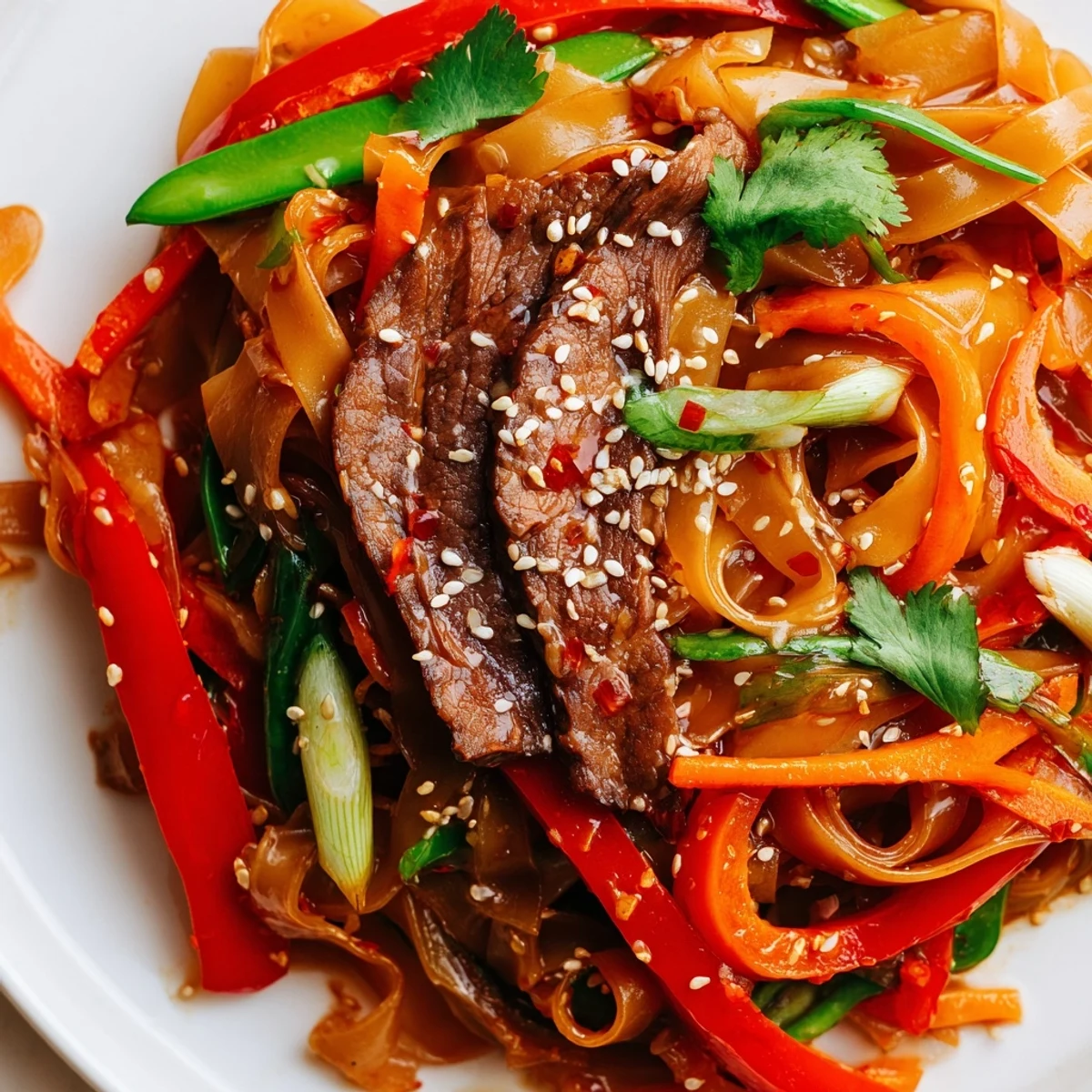
 This is the kind of dish that asks very little of you but gives back generously—bold flavor, beautiful color, and the feeling that you've accomplished something real in the kitchen. Make it once and you'll find yourself coming back to it again and again.
Recipe FAQs
- → What type of beef works best?
-
Flank steak or sirloin, sliced thinly, offers the best texture and flavor for this dish.
- → Can I use different noodles?
-
Dried wide rice noodles or egg noodles both work well and absorb the sauce nicely.
- → How can I adjust the spice level?
-
Adjust the amount of chili garlic sauce to your preferred heat intensity before tossing with other ingredients.
- → What vegetables are included?
-
This dish features red bell pepper, carrot, snow peas, garlic, ginger, and spring onions for freshness and crunch.
- → Can substitutions be made for protein?
-
Chicken or tofu can replace beef for different protein options without losing flavor.