
 Save to Pinterest
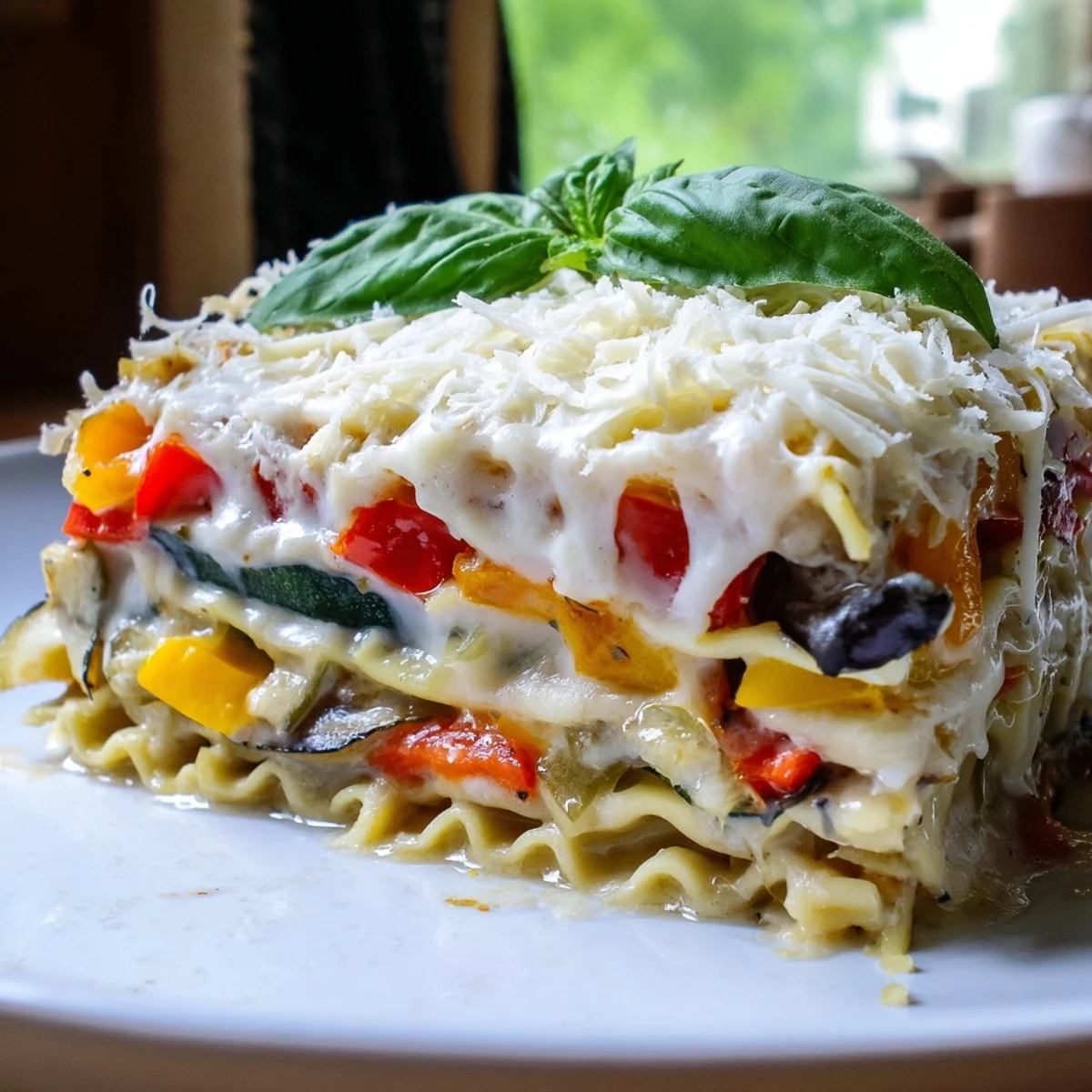
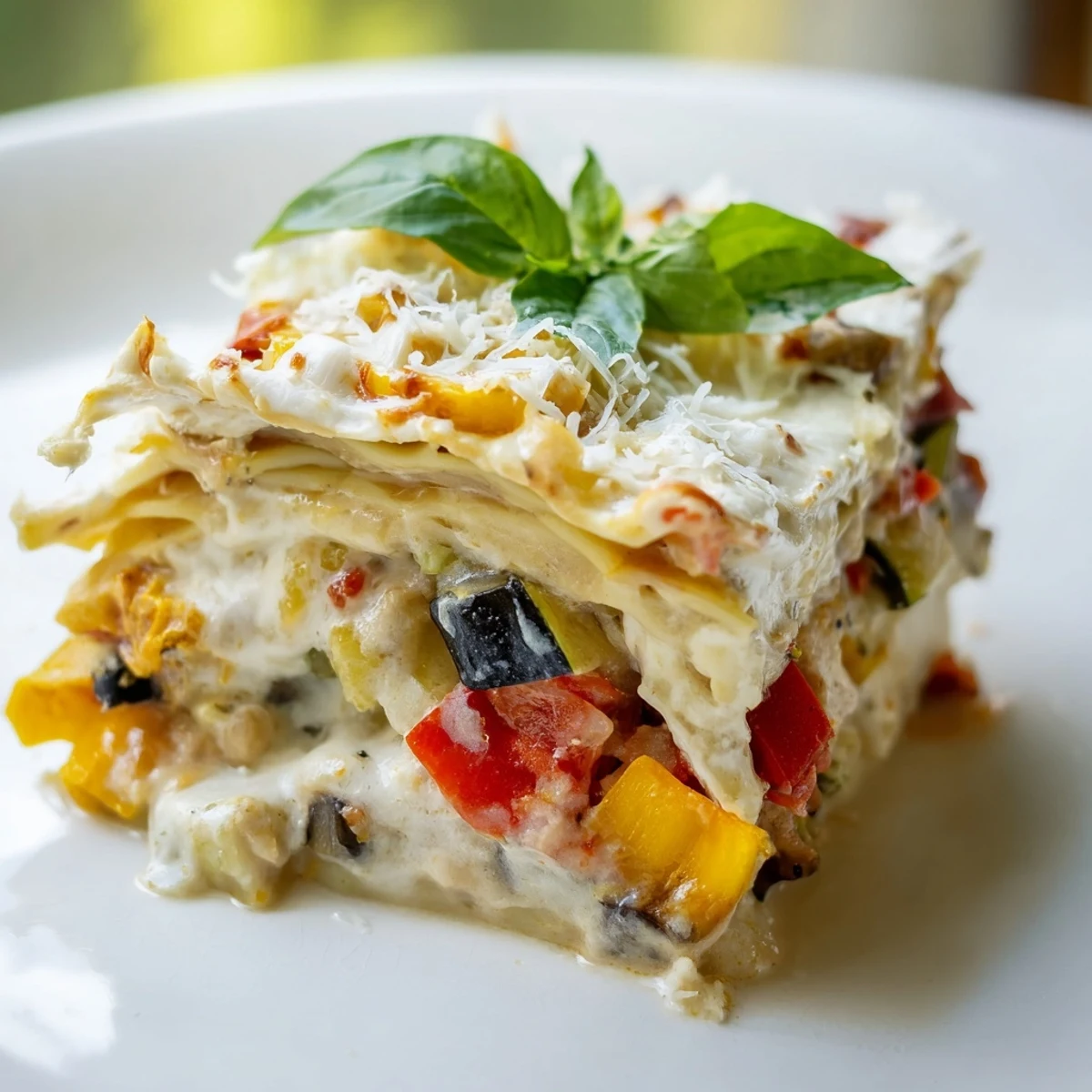
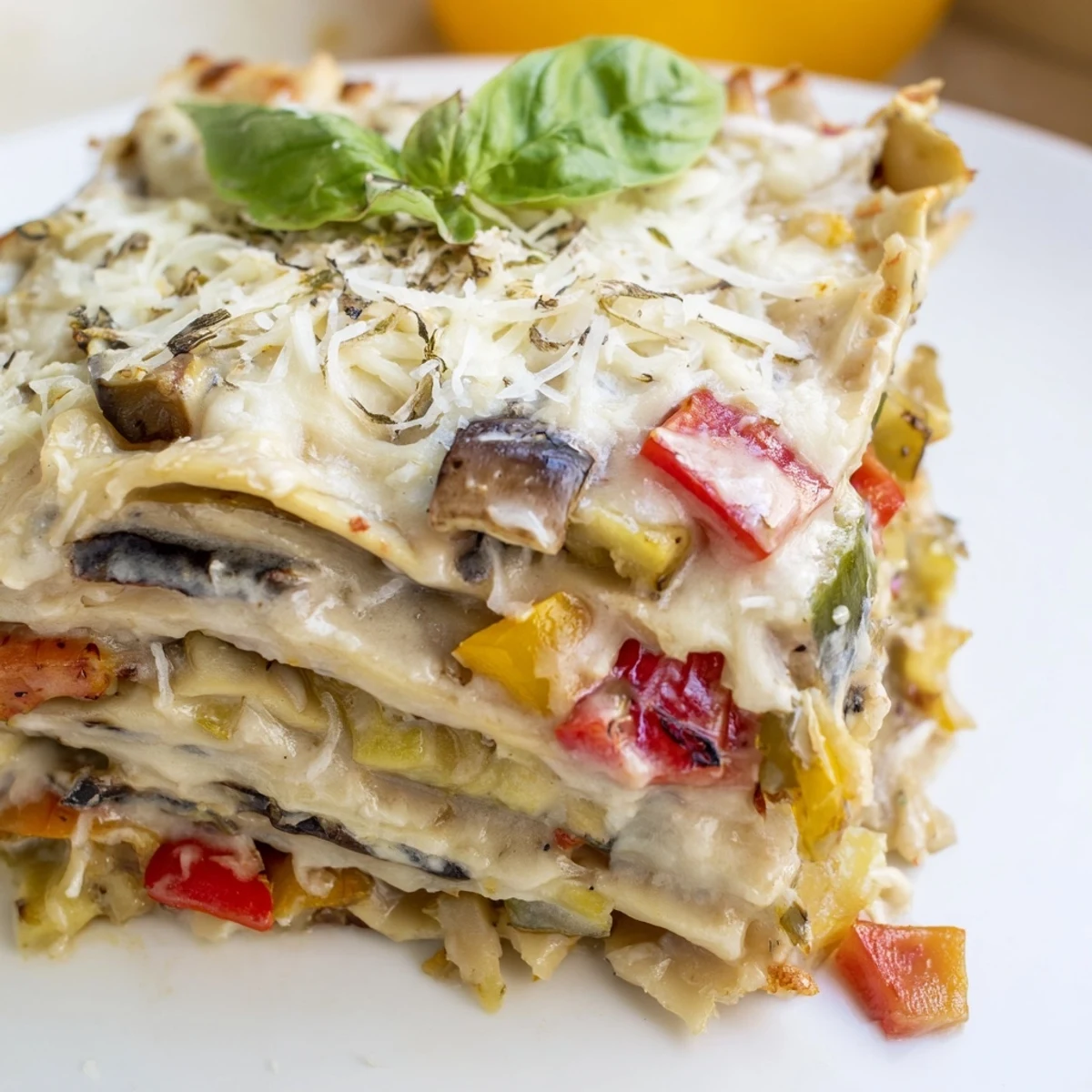
 This layered Italian dish features caramelized roasted vegetables such as zucchini, eggplant, and bell peppers combined with tender pasta sheets. A rich, creamy béchamel sauce enhanced with Parmesan cheese adds smoothness and depth. The assembly involves alternating layers of noodles, vegetables, sauce, and shredded mozzarella before baking until golden and bubbling. Perfectly balanced and garnished with fresh basil, it offers a comforting vegetarian main course.
I pulled this lasagna out of the oven on a Tuesday night when I had nothing but half a fridge of vegetables and a craving for something warm. The smell of roasted peppers and nutmeg-laced béchamel filled the kitchen so completely that my neighbor knocked to ask what I was making. It wasn't planned, but it became the dish I now make when I want to feel like I've got my life together.
The first time I served this to friends, I panicked because the noodles puffed up unevenly and I thought I'd ruined it. But when I cut into it, the layers held, the cheese bubbled at the edges, and everyone went quiet for a few bites. One friend scraped her plate clean and asked if I'd made it before, and I lied and said yes.
Ingredients
- Zucchini: Diced small so it roasts quickly without releasing too much water, which would make the lasagna soggy.
- Eggplant: The sponge of the vegetable world, it soaks up olive oil and herbs and turns silky when roasted.
- Red and yellow bell peppers: They add sweetness and color, and roasting them brings out a slight char that balances the cream.
- Red onion: Chopped and roasted until the edges go dark and jammy, it adds a slight bite that cuts through the richness.
- Olive oil: Use enough to coat everything lightly or the vegetables will steam instead of caramelize.
- Dried Italian herbs: Oregano, basil, thyme, whatever blend you have works, just make sure it's not stale or it tastes like dust.
- Unsalted butter: The base of the béchamel, and using unsalted lets you control the salt level in the sauce.
- All-purpose flour: Whisked into the butter to form a roux, it thickens the milk without clumping if you stir constantly.
- Whole milk: Warm it first so it doesn't seize the roux, and whole milk makes the sauce actually creamy instead of thin.
- Ground nutmeg: Just a pinch transforms the sauce from plain to something you want to eat with a spoon.
- Parmesan cheese: Grated fresh, not the stuff in the green can, it melts into the sauce and adds a salty, nutty depth.
- No-boil lasagna noodles: They save time and somehow always fit the pan better than regular noodles.
- Mozzarella cheese: Shredded, not sliced, so it melts evenly and gets those golden, crispy spots on top.
- Fresh basil leaves: Torn and scattered on top right before serving, they smell like summer even in winter.
Instructions
- Preheat and prep:
- Set your oven to 425°F and line a baking sheet with parchment so the vegetables don't stick and cleanup is painless. Get everything diced and ready before you start, it makes the whole process feel calmer.
- Toss and roast the vegetables:
- In a big bowl, toss the zucchini, eggplant, peppers, and onion with olive oil, herbs, salt, and pepper until every piece is coated. Spread them in a single layer on the sheet and roast for 20 to 25 minutes, stirring halfway, until the edges are browned and the kitchen smells like a Italian garden.
- Lower the oven:
- Once the vegetables are done, turn the oven down to 375°F so it's ready for the lasagna. Don't skip this or the top will burn before the middle is hot.
- Make the béchamel:
- Melt the butter in a saucepan over medium heat, then whisk in the flour and cook for a minute or two until it smells toasty but hasn't browned. Slowly pour in the warm milk, whisking the whole time, and keep stirring until the sauce thickens enough to coat the back of a spoon, about 5 to 7 minutes.
- Season the sauce:
- Stir in the nutmeg, salt, white pepper, and Parmesan, then taste it and adjust if needed. It should be creamy, slightly salty, and have a warm spice note from the nutmeg.
- Assemble the lasagna:
- Spread a thin layer of white sauce on the bottom of a 9x13-inch baking dish so the noodles don't stick. Layer noodles, then half the roasted vegetables, a third of the mozzarella, and a third of the remaining sauce, then repeat with noodles, the rest of the vegetables, another third of mozzarella, and another third of sauce, and finish with a final layer of noodles, the rest of the sauce, the rest of the mozzarella, and a sprinkle of Parmesan on top.
- Bake covered:
- Cover the dish with foil and bake for 25 minutes so the noodles soften and the flavors meld. The foil keeps the top from browning too fast.
- Bake uncovered:
- Remove the foil and bake another 15 minutes until the top is golden and bubbling at the edges. The cheese should have crispy spots and the sauce should be thick, not runny.
- Rest and serve:
- Let the lasagna sit for 10 minutes before slicing so the layers set and don't slide apart on the plate. Garnish with torn basil leaves and serve while it's still steaming.
 Save to Pinterest
 One night I made this for my mom and she ate two pieces without saying much, which is her version of a compliment. Later she texted me asking for the recipe, and I realized it had become one of those dishes that means more than the ingredients inside it. It's comfort, it's effort, it's the smell of something baking while you set the table.
How to Store and Reheat
Let the lasagna cool completely, then cover the dish tightly with foil or transfer slices to airtight containers and refrigerate for up to four days. To reheat, cover with foil and bake at 350°F for 20 minutes, or microwave individual slices for 2 to 3 minutes until hot all the way through. The flavors deepen after a day in the fridge, and sometimes I like the leftovers even more than the first serving.
Swaps and Additions
If you have baby spinach or mushrooms, sauté them and add them to the vegetable layers for extra depth. Swap the regular lasagna noodles for gluten-free ones and use a gluten-free flour blend in the béchamel if you need it. You can also add a layer of ricotta mixed with an egg and some Parmesan between the vegetables for a richer, more traditional lasagna feel.
What to Serve With It
This lasagna is rich and filling, so I usually serve it with a simple arugula salad dressed with lemon and olive oil to cut through the cream. Garlic bread is always a hit, and a glass of chilled Pinot Grigio or Vermentino feels right with the white sauce and roasted vegetables.
- A crisp green salad with a sharp vinaigrette balances the richness.
- Garlic bread or focaccia for soaking up any extra sauce on the plate.
- Roasted broccoli or green beans on the side if you want more vegetables.
 Save to Pinterest
 This lasagna has become my answer to gray days and empty refrigerators and the question of what to bring when someone says not to bring anything. It's forgiving, it's beautiful, and it tastes like you cared.
Recipe FAQs
- → What vegetables are ideal for roasting in this dish?
-
Zucchini, eggplant, bell peppers, and red onion are roasted for a caramelized, tender texture that enhances flavor layers.
- → How is the creamy white sauce prepared?
-
The béchamel sauce is made by melting butter, whisking in flour, then gradually adding warmed milk until thickened, seasoned with nutmeg, salt, white pepper, and Parmesan cheese.
- → Can I use no-boil noodles for this dish?
-
Yes, no-boil lasagna noodles work well and simplify preparation, absorbing flavors during baking.
- → What is the best way to assemble the layers?
-
Start with a thin layer of sauce, add noodles, half the roasted vegetables, then mozzarella and sauce. Repeat layers and finish with cheese on top.
- → How long should it rest before serving?
-
Allowing the dish to rest for 10 minutes after baking helps set the layers and enhances sliceability.