
 Save to Pinterest
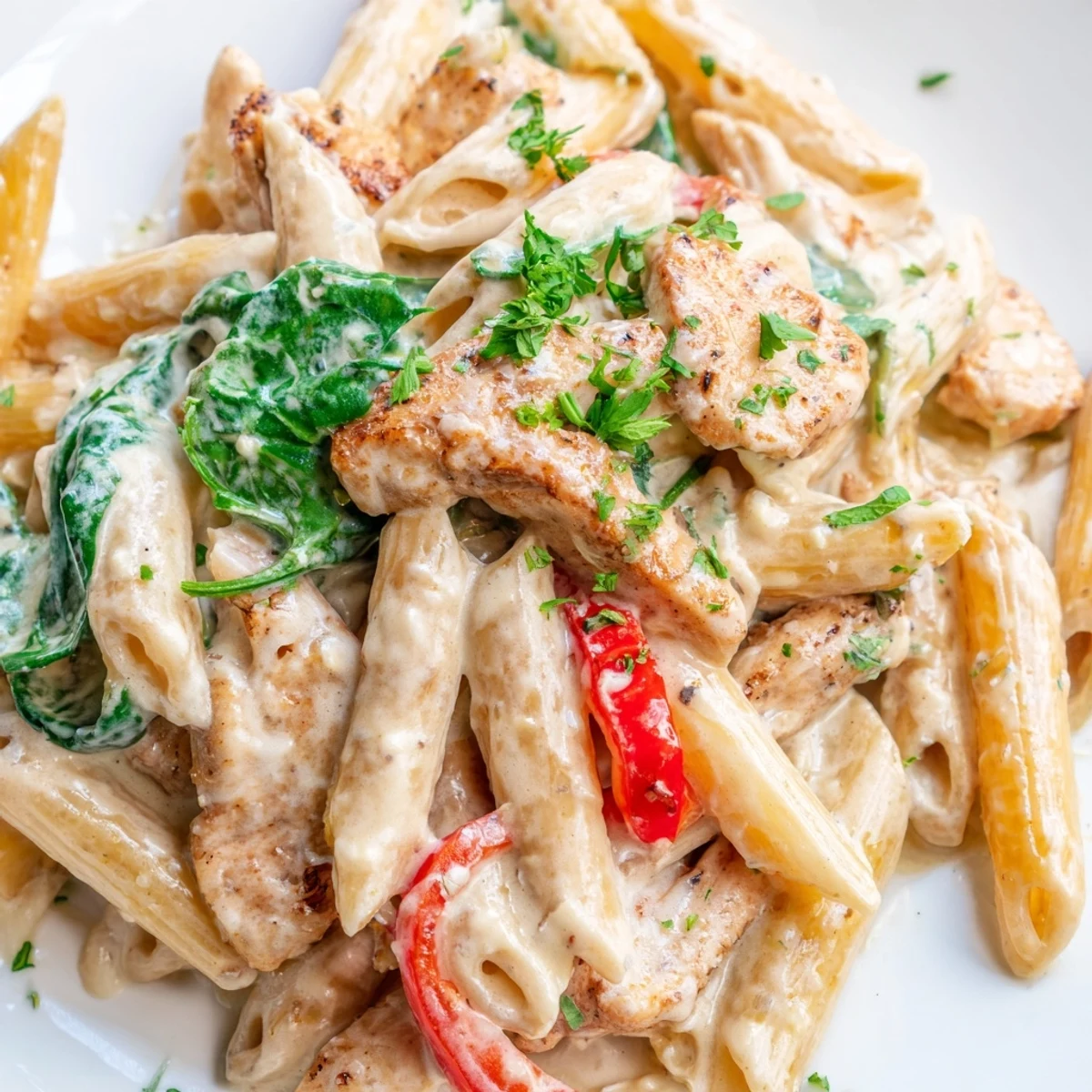
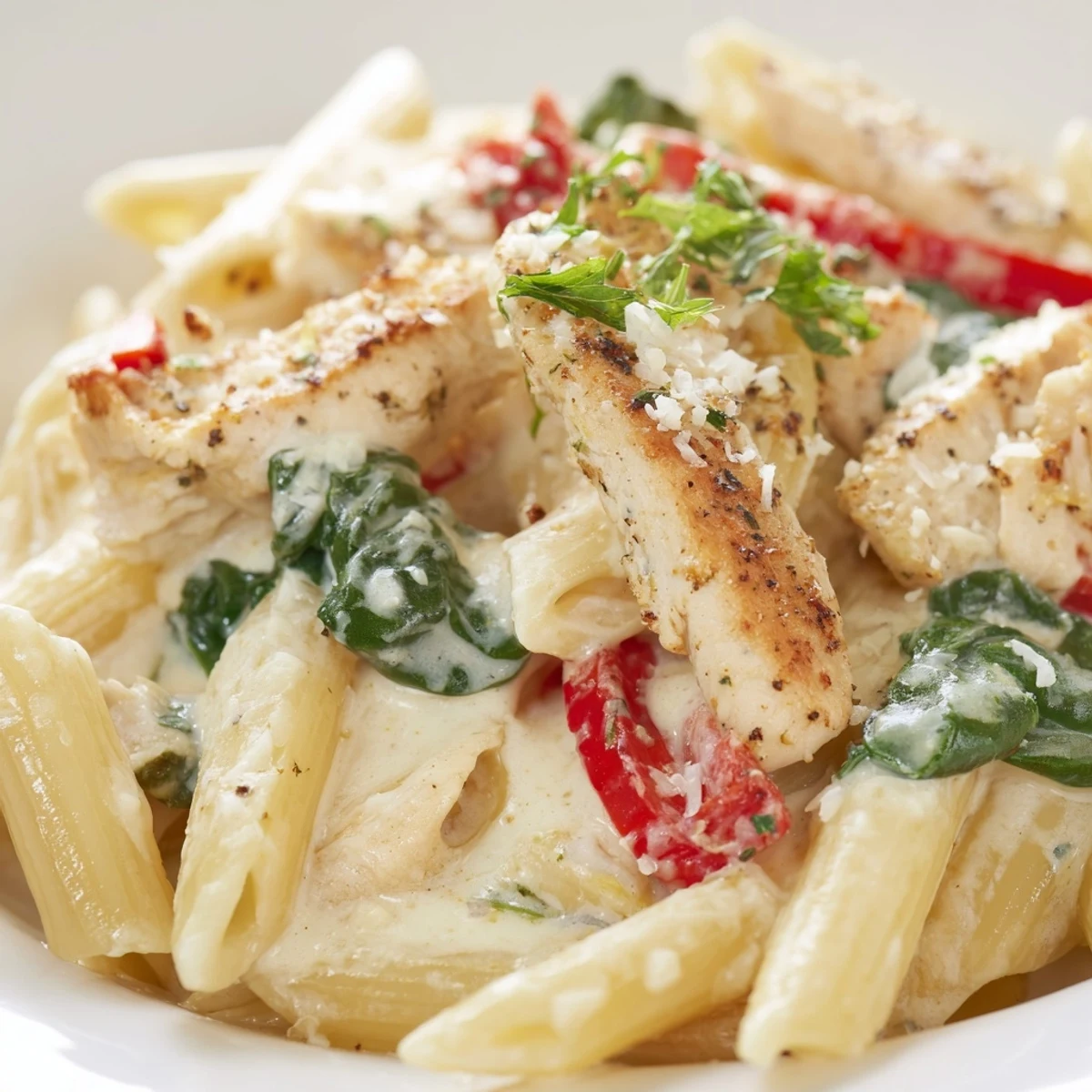
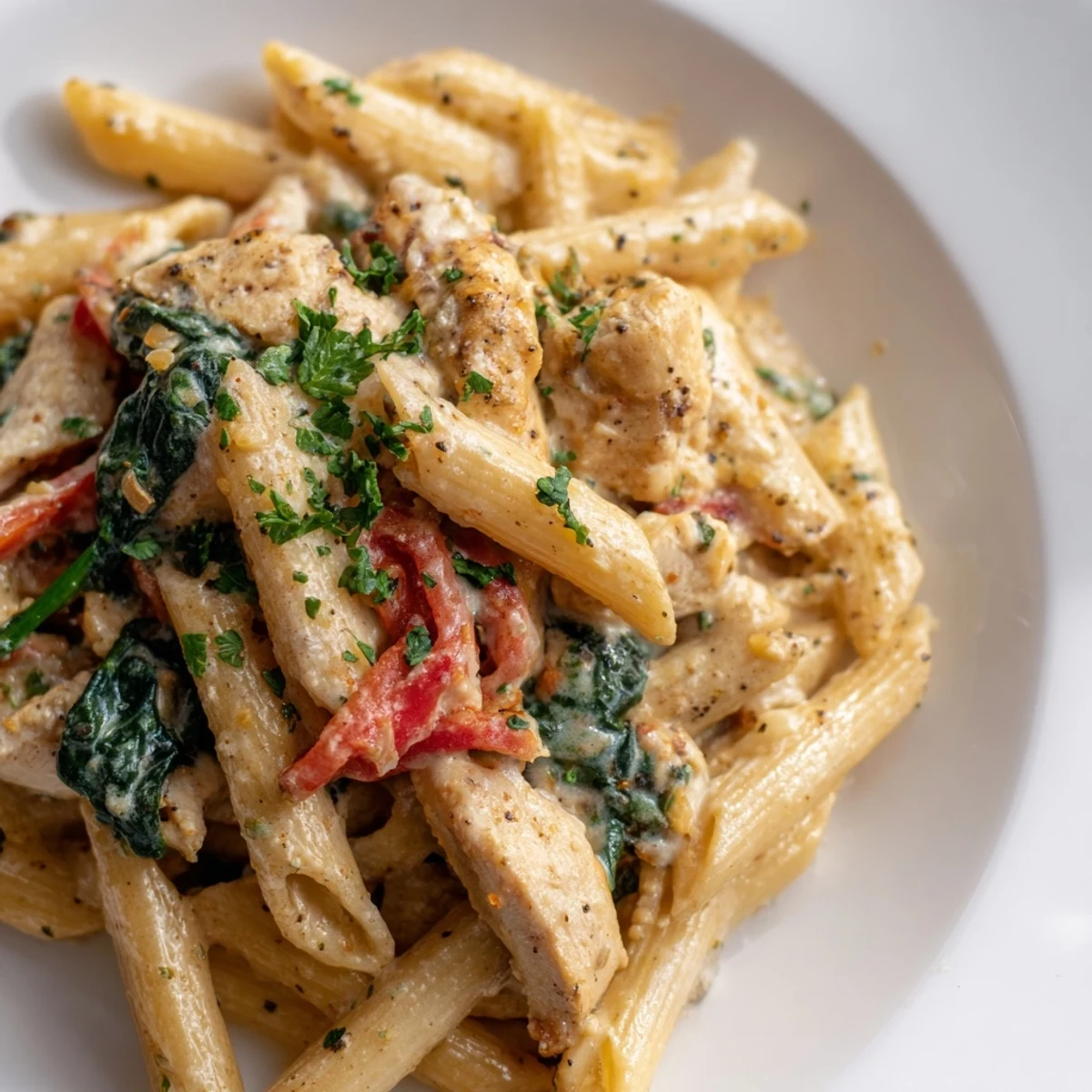
 This comforting pasta dish features tender slices of chicken cooked to golden perfection, tossed with sautéed onion, garlic, bell pepper, and baby spinach. A rich, silky sauce made from heavy cream, chicken broth, Parmesan, Italian herbs, and a hint of nutmeg coats the pasta, creating layers of flavor and smooth texture. The dish comes together quickly and is ideal for a cozy weeknight meal, garnished with fresh parsley and extra Parmesan for added brightness.
There's something about the smell of cream and garlic hitting a hot pan that makes everything feel manageable, even on nights when the kitchen feels like the last place you want to be. I stumbled onto this creamy pasta almost by accident—a half-empty carton of heavy cream, some chicken I needed to use, and the sudden realization that dinner could come together in under an hour. What started as improvisation became the kind of dish that now gets requested by name.
I made this for a friend who'd had a rough week, and watching her face when she tasted it reminded me that sometimes the simplest dishes carry the most weight. She asked for the recipe before she'd even finished her plate, which is how I knew it was worth perfecting.
Ingredients
- Penne or fettuccine (350 g): I prefer penne because it catches the cream better, but fettuccine works beautifully if that's what you have—the key is cooking it to actual al dente, which means it should still have a tiny bit of resistance when you bite it.
- Chicken breasts (2 medium): Slicing them into strips instead of cooking them whole means they're done in minutes and distribute evenly through the pasta, and they'll be tender if you don't overwork them.
- Olive oil (1 tbsp): Just enough to keep the chicken from sticking without making the pan greasy.
- Salt and black pepper: Season the chicken generously—this is where half the flavor happens.
- Yellow onion (1 small): Chopped small so it softens quickly and becomes almost invisible in the sauce, lending sweetness rather than bite.
- Garlic cloves (2, minced): Mince them fine so they melt into the sauce rather than staying chunky, releasing their full flavor as they cook.
- Red bell pepper (1): Sliced rather than diced so you can actually see it in the dish, and the slight sweetness balances the richness of the cream.
- Baby spinach (150 g): Fresh spinach wilts into almost nothing, so don't be shy about the amount—it adds color and nutrition without changing the flavor.
- Heavy cream (250 ml): The heart of the sauce; don't substitute half-and-half or milk, which will curdle or break under the heat.
- Chicken broth (80 ml): This keeps the sauce from feeling too heavy and ties all the flavors together.
- Parmesan cheese (60 g, grated): Grate it fresh if you can; the pre-packaged stuff has anti-caking agents that make the sauce grainy.
- Dried Italian herbs (1/2 tsp): Or use a combination of dried basil, oregano, and thyme—the point is to add depth without overwhelming.
- Ground nutmeg (pinch): A whisper of nutmeg in cream sauces is one of those secrets that makes people ask what you did differently.
- Fresh parsley and extra Parmesan: These finish the dish and make it feel intentional rather than rushed.
Instructions
- Start the pasta:
- Bring a large pot of salted water to a rolling boil—it should taste like the sea. Add pasta and cook according to the package time, but start testing a minute or two before it says it's done; you want it tender with just a slight firmness when you bite it. Drain it, but keep that starchy pasta water nearby—it's the secret to a silky sauce.
- Cook the chicken:
- While the pasta cooks, heat olive oil in a large skillet over medium-high heat until it shimmers. Season your chicken strips with salt and pepper, then add them to the hot pan; you should hear a satisfying sizzle. Let them cook undisturbed for about three minutes until the bottoms are golden, then stir and cook until cooked through, about five minutes total—they'll firm up as they cool, so don't panic if they look slightly soft in the pan.
- Build the flavor base:
- Remove the cooked chicken to a plate and lower the heat to medium. Add the chopped onion to the same skillet and let it soften for two minutes, stirring occasionally; when it starts to turn translucent, add your minced garlic. Cook for about thirty seconds until it becomes fragrant, then add the sliced bell pepper and cook for three to four minutes until it's tender but still has some color.
- Create the cream sauce:
- Pour the heavy cream and chicken broth into the skillet, stirring gently to combine everything. Sprinkle in the grated Parmesan, Italian herbs, and just a pinch of nutmeg, then let it simmer for three to four minutes, stirring occasionally; you'll feel it thicken slightly as the Parmesan melts and the cream reduces. Taste it now—this is when you can adjust the seasoning.
- Bring it together:
- Add the cooked chicken back to the sauce along with the baby spinach, stirring gently until the spinach wilts, about one to two minutes. Now add your drained pasta and toss everything together, adding splashes of that reserved pasta water until the sauce clings to the noodles without being soupy. It should coat everything in a silky layer.
- Finish and serve:
- Transfer to a serving dish or bowls, scatter with fresh parsley and a generous handful of extra Parmesan, and serve immediately while it's hot and creamy.
 Save to Pinterest
 What made this dish stick in my memory wasn't just how quickly it came together, but the quiet moment after dinner when someone said this was exactly what they needed. That's when I understood that good food is sometimes less about technique and more about timing—knowing what someone needs and delivering it without fuss.
The Magic of Cream Sauces
Cream sauces intimidate a lot of home cooks, but they're actually forgiving if you understand one principle: heat and patience. The cream doesn't break if you keep the temperature moderate and add other ingredients slowly; rushing or overheating is what causes problems. Once you trust this, you realize cream is an incredibly versatile canvas for flavors, and this dish is really just a study in how to balance richness with brightness from the vegetables and herbs.
Pasta Water, the Secret Ingredient
Most people drain their pasta and throw away the water, which is a missed opportunity. That starchy liquid is what transforms a cream sauce from slick and separated to silky and unified, clinging to every noodle. It's the difference between a sauce that coats pasta and pasta swimming in sauce, and once you start using it intentionally, you'll find yourself reserving it for every pasta dish you make.
Timing and Temperature
The rhythm of this dish matters—everything should move at a medium pace, not rushed and not dawdling. When you nail the timing, the pasta finishes just as the sauce is ready, the chicken is already cooked, and the vegetables are tender. This recipe teaches you to trust your senses: the smell of garlic hitting the pan, the sound of cream beginning to bubble, the feel of pasta between your teeth to test for doneness.
- Start tasting the pasta one minute before the package says it's done; it finishes cooking slightly as it sits.
- If your sauce seems too thin, simmer it a minute longer; if it's too thick, add pasta water a splash at a time.
- Serve immediately—this dish doesn't wait around, and it's best when everything is hot and coming together on the plate.
 Save to Pinterest
 This pasta has become my answer to the question we all face most nights: what can I make that's satisfying, manageable, and feels like something special? It's proof that comfort doesn't have to mean complicated, and that sometimes the best meals are the ones that come together almost on their own, tasting like you spent all day in the kitchen when really you just trusted the process.
Recipe FAQs
- → What pasta types work best for this creamy dish?
-
Penne or fettuccine are ideal as they hold the rich sauce well and provide a satisfying texture.
- → How can I ensure the chicken remains tender?
-
Cook chicken strips on medium-high heat until just golden and cooked through, avoiding overcooking to keep them juicy.
- → Can I substitute the cream with a lighter option?
-
Light cream or half-and-half can be used, but may result in a less thick sauce. Adjust cooking time to allow gentle simmering.
- → What is the purpose of reserving pasta water?
-
Pasta water contains starch that helps to loosen and bind the sauce, giving it a glossy finish and perfect consistency.
- → How do the Italian herbs enhance the dish?
-
They add subtle aromatic notes, balancing the richness of the cream and Parmesan and complementing the vegetables and chicken.