
 Save to Pinterest
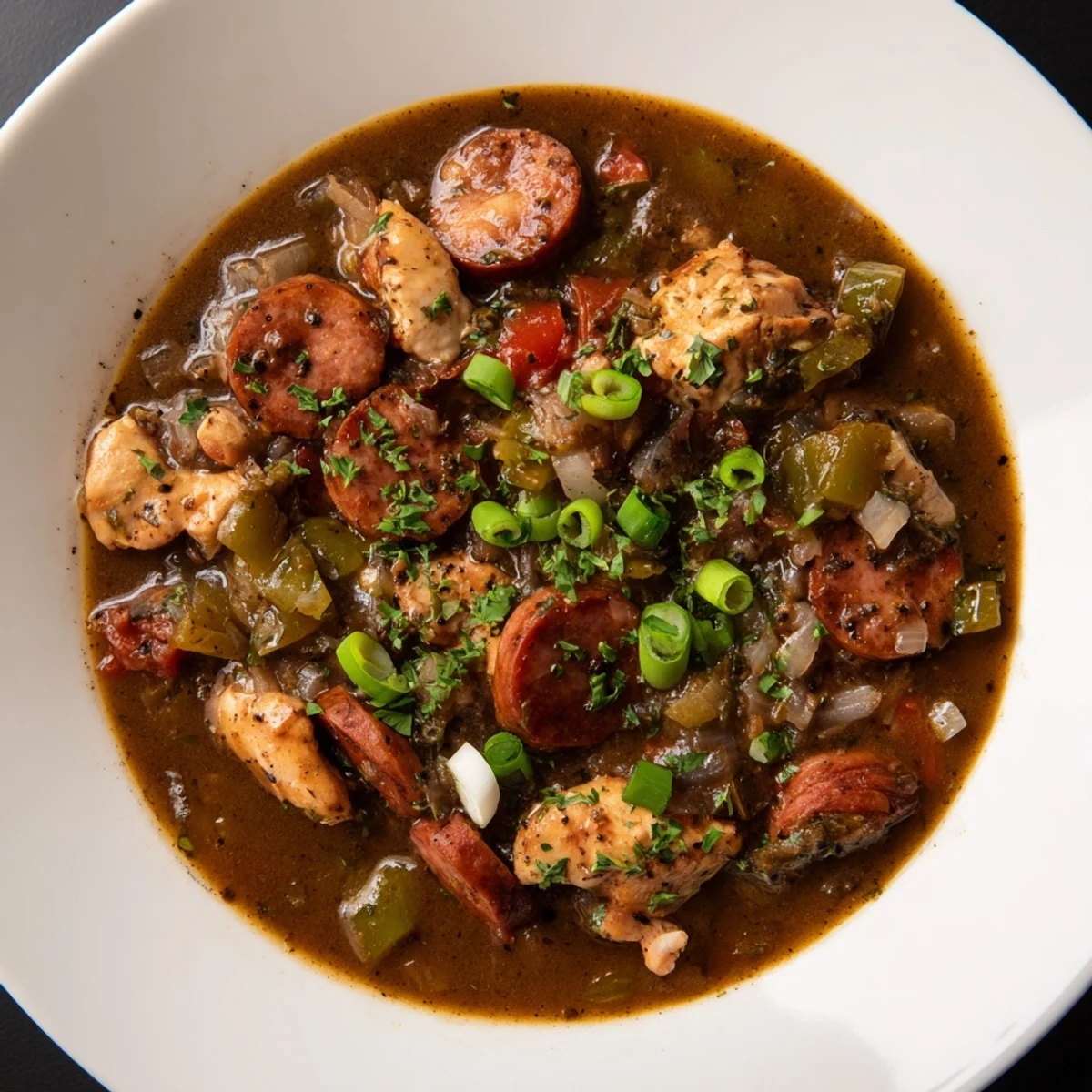
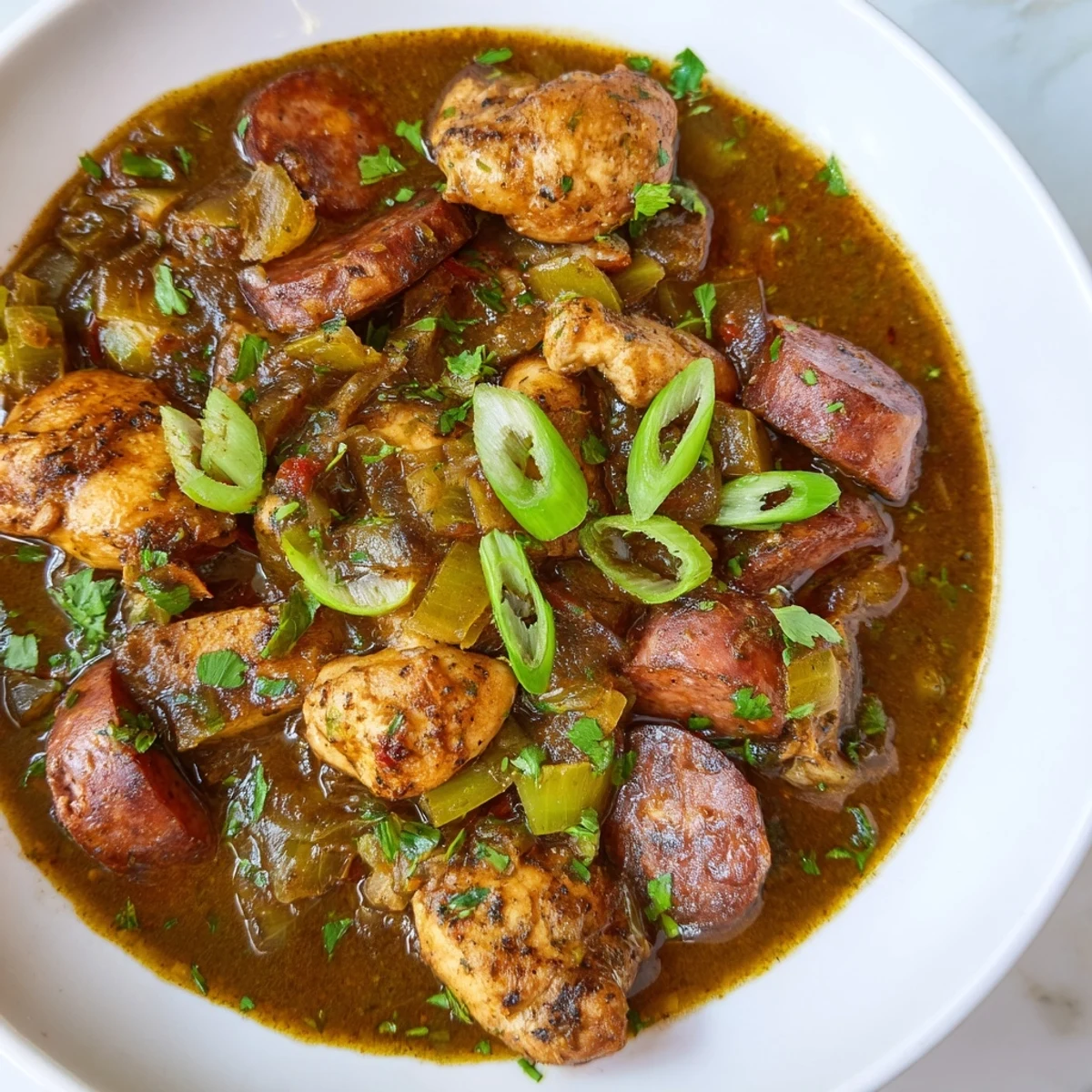
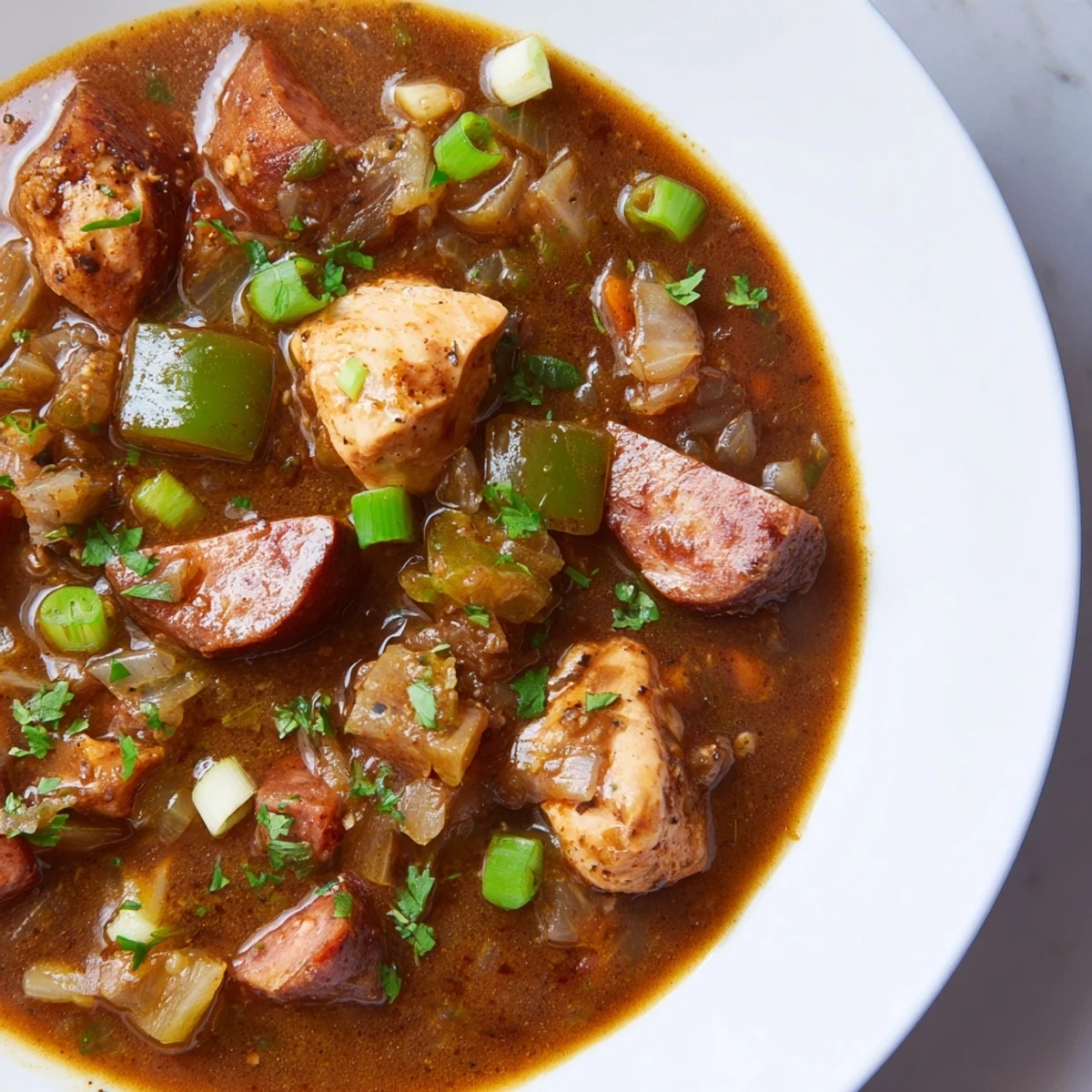
 This hearty dish blends tender chicken thighs and smoky beef sausage with aromatic onion, bell pepper, celery, and garlic, slow-cooked in a deep golden roux. Flavored with Cajun seasoning and spices like paprika and thyme, it simmers alongside diced tomatoes and chicken stock to build rich depth. Served over white rice and garnished with fresh spring onions and parsley, this flavorful Cajun classic delivers comforting warmth and bold taste, perfect for a satisfying main course. Adjust heat with cayenne or hot sauce as desired.
The first time I attempted gumbo, I stood over that roux for twenty minutes, arm aching, convinced I'd ruined it when it turned darker than I expected. But that deep mahogany color was exactly what I should have been aiming for. Now I know that patience with the roux is what separates a good gumbo from an unforgettable one. The rich, nutty flavor it develops becomes the foundation of everything that follows.
I made this for a Mardi Gras party a few years back, not realizing just how much gumbo a single pot could produce. My friend Marcus, who'd spent time in New Orleans, took one bite and went silent for a full minute. When he finally spoke, he simply asked for the recipe and a to-go container. Now it's become our February tradition, the house filling with that impossible-to-describe aroma of roux and spices while winter rages outside.
Ingredients
- Chicken thighs: Boneless and skinless keeps things manageable, but thighs are essential here because they stay tender through the long simmer without drying out like breast meat would
- Beef sausage: Andouille is traditional if you can find it, but any smoky beef sausage brings that essential depth and a bit of heat that cuts through the rich roux
- Onion, bell pepper, and celery: This holy trinity of Cajun cooking forms the aromatic base, so take the time to chop them evenly so they cook at the same rate
- Garlic: Minced fresh adds that sharp kick that balances the darkness of the roux, and four cloves might feel generous but it's necessary here
- Flour and oil: Equal parts by weight create the roux, and getting this right is non-negotiable, it's the difference between a stew and actual gumbo
- Chicken stock: Homemade would be ideal, but a good quality store-bought stock works perfectly fine as the liquid backbone of the dish
- Diced tomatoes: Drain them well so they add body without making the gumbo too thin, their acidity brightens all those rich flavors
- Worcestershire sauce: Just a tablespoon brings that umami depth that people notice but can never quite identify
- Bay leaf: Classic aromatic that simmers quietly in the background, but remember to fish it out before serving
- Cajun seasoning: The spice blend that ties everything together, and if you make your own, even better for adjusting the heat level
- Smoked paprika: Adds another layer of smoke without adding more heat, complementing the sausage beautifully
- Dried thyme and oregano: These herbs provide that earthy, floral note that keeps the gumbo from feeling one-dimensionally spicy
- Cayenne pepper: Start with half a teaspoon and taste as you go, because cayenne's heat builds and you can always add more but you can't take it back
- Salt and black pepper: Season at the end because the roux reduction concentrates flavors and you won't know the true salt level until then
Instructions
- Make the roux:
- Heat the oil in your heavy pot over medium heat, then gradually whisk in the flour until smooth. Stir constantly without stopping for 10 to 15 minutes until it turns a deep golden brown, almost the color of peanut butter. The roux will thin and thicken as it cooks, which is normal, but don't step away or it will burn.
- Cook the vegetables:
- Throw in the onion, bell pepper, celery, and garlic right into the hot roux. Stir for about 5 minutes until the vegetables soften and the mixture becomes fragrant. The roux might seize up a bit when you add the vegetables, but keep stirring and it will loosen back up.
- Add the proteins and spices:
- Stir in the chicken, sliced sausage, and all your spices. Let this cook for another 5 minutes, stirring occasionally to coat everything in that flavorful roux. The chicken will start to turn opaque on the outside, which is exactly what you want before adding liquid.
- Simmer the gumbo:
- Pour in the chicken stock, drained tomatoes, Worcestershire sauce, and bay leaf. Bring everything to a boil, then lower the heat and let it simmer uncovered for 45 minutes. Stir occasionally to make sure nothing is sticking to the bottom, and let the liquid reduce until it's nicely thickened.
- Season and serve:
- Taste and adjust with salt and pepper, remembering that you've been building layers of flavor this whole time. Fish out that bay leaf and serve the gumbo hot over white rice. Scatter spring onions and parsley on top, and pass the hot sauce around for anyone who wants to turn up the heat.
 Save to Pinterest
 There's something almost meditative about making gumbo, standing at the stove and stirring that roux until your arm protests. My grandmother used to say that the love you put into the roux comes through in the final bowl, and I never really understood what she meant until I started making it myself. Now I realize she wasn't talking about magic or sentiment, but about attention and care.
The Art of the Roux
A proper roux is equal parts flour and fat, cooked to varying degrees of color from blonde to brunette to the deep dark brown we use here. The darker the roux, the less thickening power it has, but the more complex the flavor becomes. That's why gumbo recipes call for more flour than you might expect in a thickener, you need that extra starch when you cook it this dark.
Making It Your Own
Some cooks add okra for thickness and tradition, while others swear by filé powder at the end. You can throw in shrimp during the last ten minutes or swap the chicken for duck if you're feeling fancy. The essential elements remain the roux, the holy trinity of vegetables, and that low, slow simmer that brings everything together.
Serving and Storage
Gumbo deserves to be the star of the show, so keep sides simple, maybe some crusty bread or a light green salad to cut the richness. Rice is traditional but not mandatory if you're watching carbs, though it does help balance the intense flavors.
- Refrigerate leftovers for up to four days, but honestly, it reaches peak flavor on day two when all those spices have had time to really marry
- Freeze individual portions for up to three months, and consider making a double batch because gumbo freezes beautifully
- Reheat gently over low heat, adding a splash of water or stock if it's thickened too much in the fridge
 Save to Pinterest
 Good gumbo is worth every minute of stirring and waiting. There's a reason this dish has been feeding families for generations, and I hope it becomes part of your story too.
Recipe FAQs
- → What type of sausage is best used?
-
Andouille sausage is traditional for authentic smoky flavor, but any smoky beef sausage works well.
- → How is the roux prepared to achieve the right color?
-
Cook the flour and oil mixture over medium heat, stirring constantly for 10–15 minutes until it turns a deep golden brown, careful not to burn.
- → Can this dish be made in advance?
-
Yes, flavors deepen overnight if refrigerated and reheated the next day.
- → What sides pair well with this dish?
-
Cooked white rice is classic; a crisp lager or dry Riesling complements the spicy flavors.
- → How can I adjust the spice level?
-
Adjust cayenne pepper to taste or add hot sauce when serving for extra heat.
- → Is it necessary to brown the sausage before adding?
-
For extra flavor, browning sausage slices before simmering enhances its smokiness and texture.