
 Save to Pinterest
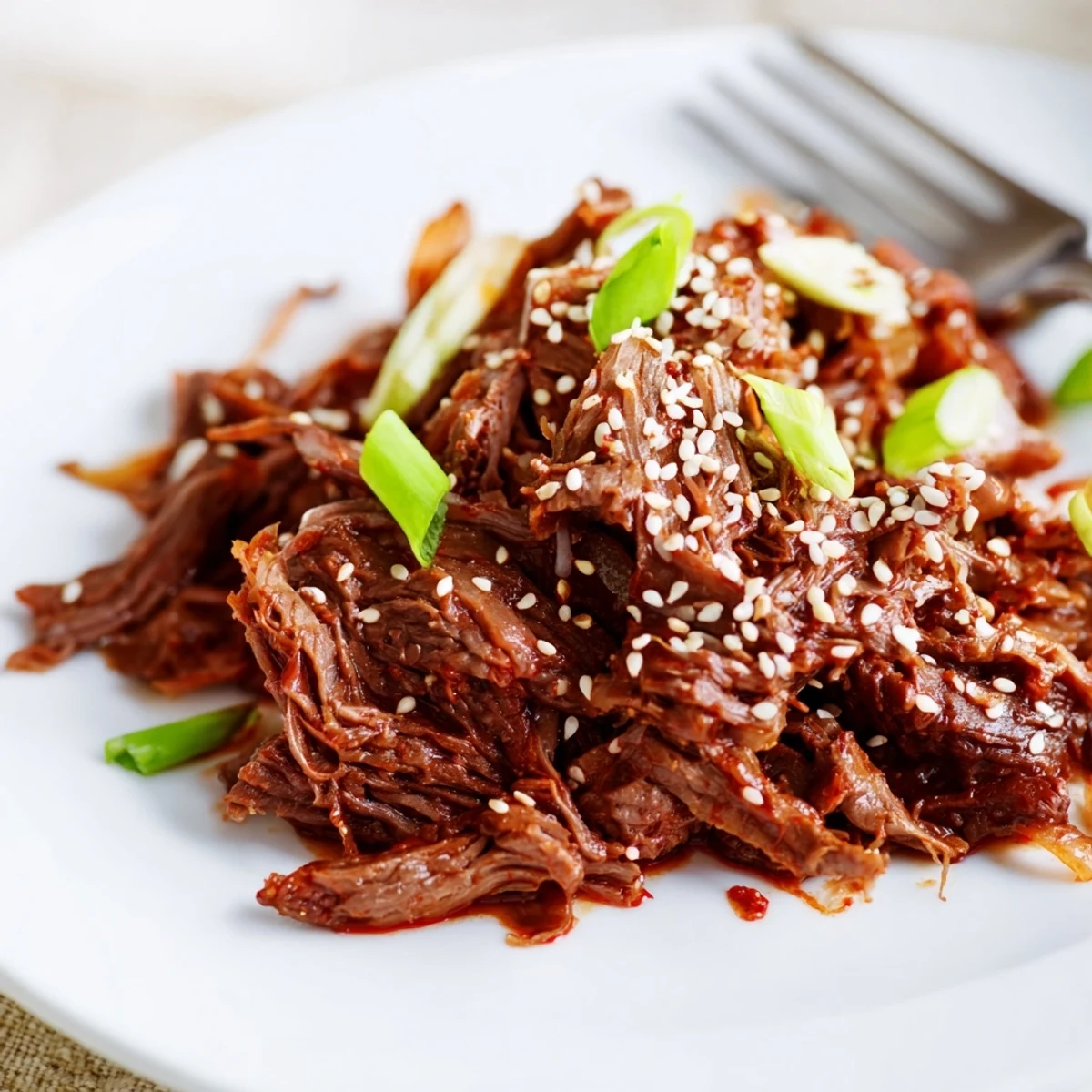
 This effortless dish transforms beef chuck roast into melt-in-your-mouth tenderness after hours of slow cooking. The beef simmers in a rich, Korean-inspired sauce blending soy sauce, brown sugar, sesame oil, garlic, fresh ginger, rice vinegar, and gochujang chili paste. The result is deeply flavorful meat with a perfect balance of savory and sweet notes. Simply shred the finished beef and serve over steamed rice, nestled in lettuce wraps, or alongside kimchi and pickled vegetables for a complete meal.
The smell of sesame oil and garlic hitting a hot pan always pulls me back to my tiny first apartment kitchen. I hadnt yet discovered the magic of slow cooking then, and my early attempts at Korean beef were tough and overdone. When I finally bought a beat-up slow cooker from a thrift store, everything changed. That first batch of meltingly tender beef had me texting my sister at midnight to demand she come over for leftovers.
I served this at my annual fall dinner party last year, and my friend Sarah actually licked her plate. Six adults gathered around my coffee table with lettuce wraps and rice, passing the platter back and forth until every scrap was gone. Later that night, I found three separate people hovering over the slow cooker with spoons, dipping into the remaining sauce like it was soup.
Ingredients
- Beef chuck roast: The marbling in chuck roast breaks down during slow cooking, creating those luscious tender strands that melt in your mouth
- Low-sodium soy sauce: Starting with less salt lets you control the seasoning since the sauce reduces and concentrates over hours
- Brown sugar: The molasses notes create a caramel-like depth that white sugar just cant match in Korean-style sauces
- Sesame oil: This aromatic oil is the backbone of Korean cooking, and toasting it yourself beforehand makes your kitchen smell incredible
- Gochujang: This fermented chili paste brings umami, heat, and complexity that makes the sauce taste like it simmered all day
- Rice vinegar: A bright acidity cuts through the richness and keeps the sauce from becoming too cloying
- Fresh ginger and garlic: Grating them fresh instead of using powder makes such a huge difference in the final flavor
- Cornstarch: This optional step thickens the sauce into something that clings beautifully to every piece of beef
Instructions
- Prep your meat and aromatics:
- Cut the beef into generous two-inch chunks and slice your onion into thin half-moons. The onion will nearly disappear into the sauce, adding sweetness and depth.
- Whisk together the sauce:
- Combine the soy sauce, brown sugar, sesame oil, garlic, ginger, rice vinegar, gochujang, sesame seeds, and black pepper in a bowl. The mixture should look glossy and smell intoxicatingly aromatic.
- Layer everything in the slow cooker:
- Arrange the beef and onions in your slow cooker, then pour that gorgeous sauce over everything. Use tongs to toss the pieces around until theyre evenly coated.
- Let the slow cooker work its magic:
- Cook on low for 8 hours or high for 4 hours. Your house will smell amazing, and the beef should be fork-tender and practically falling apart.
- Thicken if desired:
- Whisk together the cornstarch and water, then stir into the slow cooker during the last 30 minutes. The sauce will transform into something glossy and spoon-worthy.
- Shred and serve:
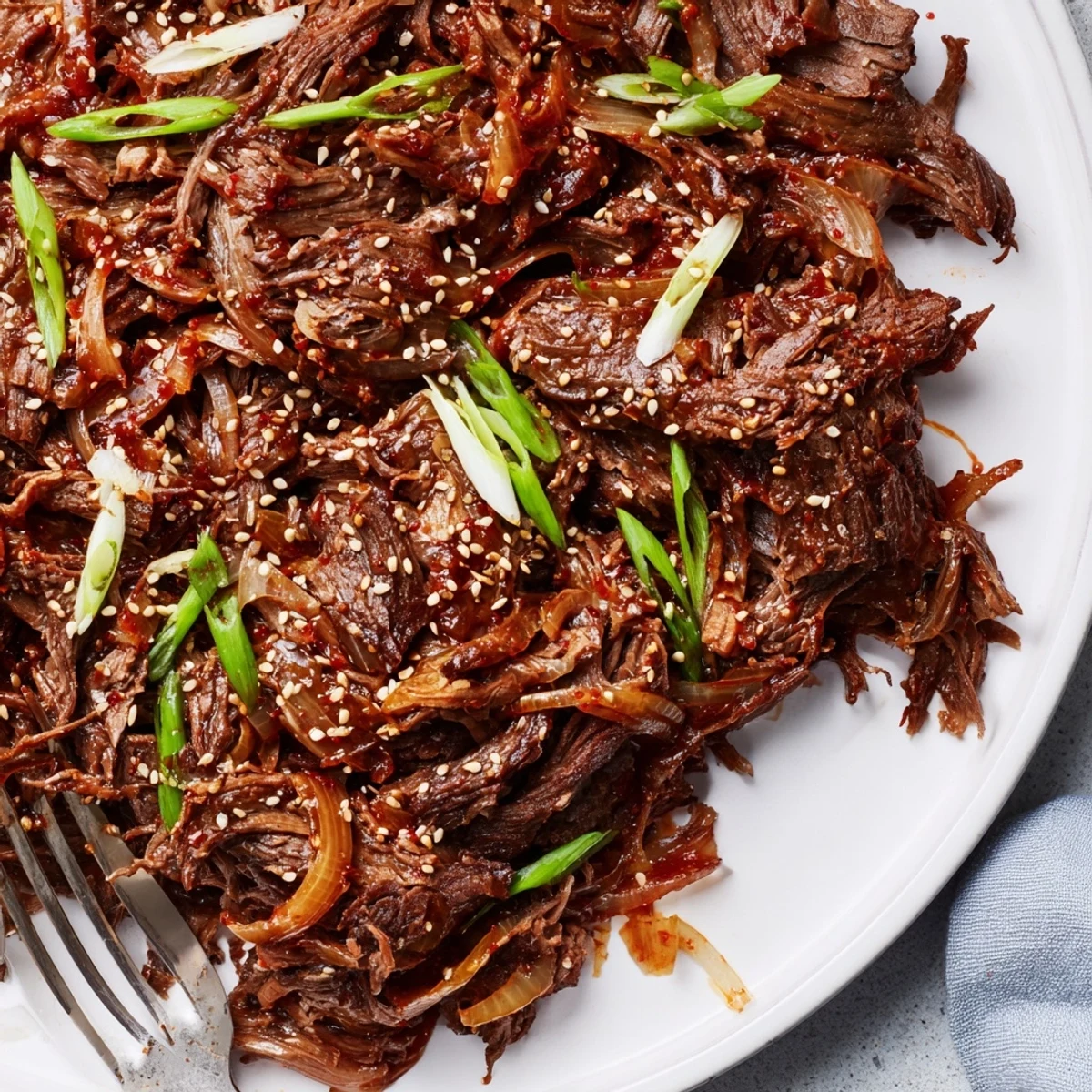
- Use two forks to pull the beef apart into shreds, mixing it with all that flavorful sauce. Top with green onions and extra sesame seeds before serving over rice or in lettuce cups.
 Save to Pinterest
 This recipe has become my go-to for new parents and anyone needing a meal that feels like a hug. Theres something profoundly satisfying about watching tough, inexpensive meat transform into something luxurious with almost no effort.
Making It Your Own
Ive experimented with adding pear to the sauce, which is traditional in Korean marinades and creates incredible tenderness. A grated Asian pear or even a handful of pineapple juice works wonders. Sometimes Ill throw in carrots and daikon radish during the last few hours for extra vegetables.
Serving Ideas That Work
Lettuce wraps with kimchi and steamed rice are my favorite way to serve this, but dont stop there. The beef makes incredible tacos with pickled vegetables, or stuff it into baked sweet potatoes. Ive even served it over ramen noodles with a soft-boiled egg for the ultimate comfort bowl.
Make-Ahead Magic
This recipe actually tastes better the next day when the flavors have had time to meld. I often make a double batch on Sunday and portion it out for lunch throughout the week. The beef freezes beautifully, and I keep single-serving containers in my freezer for those nights when cooking anything feels impossible.
- Let the beef cool completely before freezing to maintain the best texture
- Reheat with a splash of water or broth to loosen the sauce
- The leftovers make incredible fried rice the next morning
 Save to Pinterest
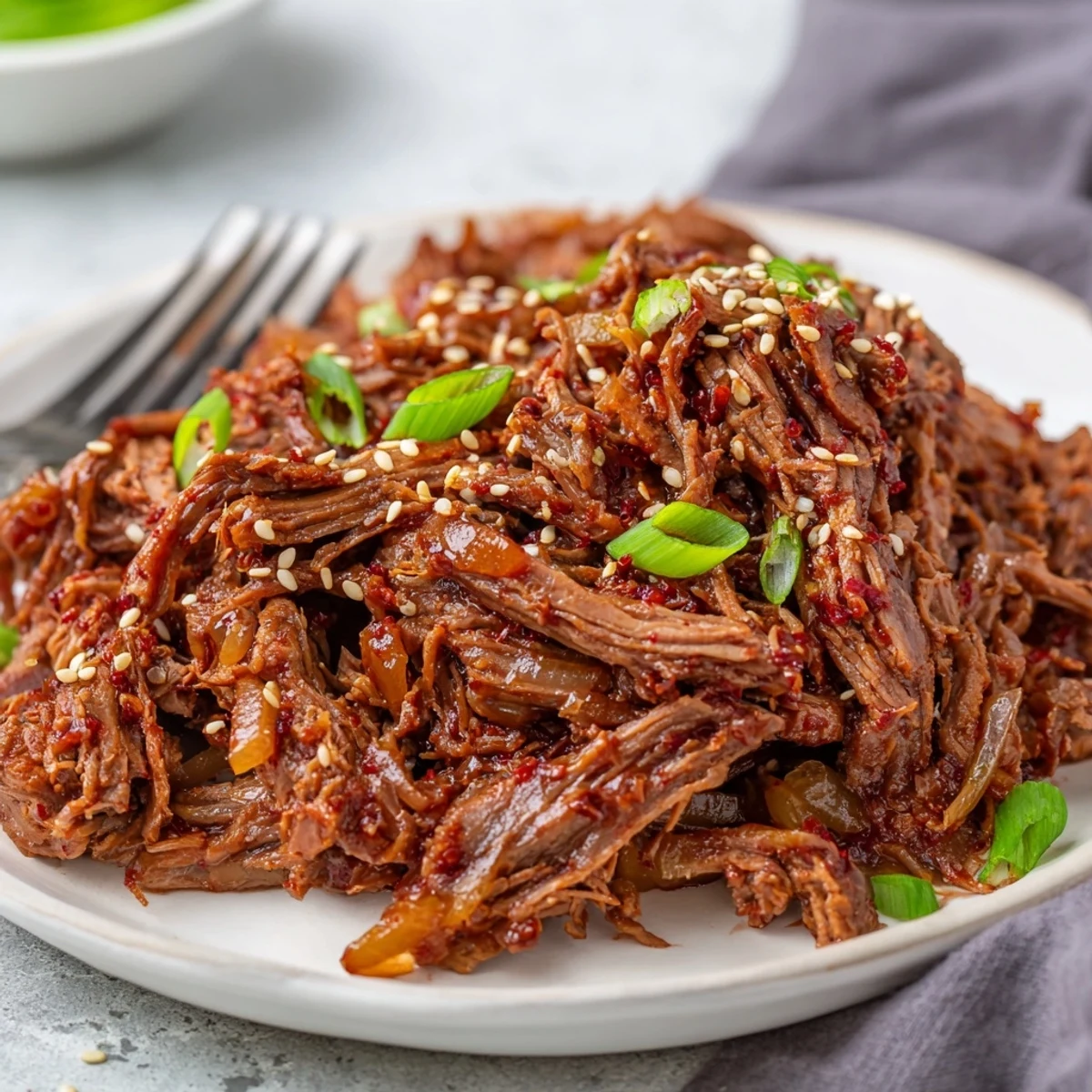
 Theres nothing quite like lifting that slow cooker lid after eight hours and seeing beef so tender it practically falls apart at the sight of a fork. This is the kind of recipe that makes feeding people feel like love.
Recipe FAQs
- → What cut of beef works best?
-
Beef chuck roast is ideal because it becomes incredibly tender after long, slow cooking. The marbling breaks down beautifully, creating succulent, shreddable meat.
- → Can I make this spicier?
-
Absolutely. Increase the gochujang amount or add red pepper flakes to the sauce mixture. You can also serve with extra chili paste on the side.
- → How do I store leftovers?
-
Refrigerate in an airtight container for up to 3 days. The flavors continue to develop, often tasting even better the next day. Reheat gently on the stovetop or microwave.
- → What should I serve with this?
-
Steamed white or brown rice is classic. Lettuce cups make for lighter wraps. Pair with kimchi, pickled vegetables, or steamed bok choy for a complete Korean-inspired spread.
- → Can I use a pressure cooker instead?
-
Yes. Cook on high pressure for about 60-75 minutes, then allow natural release. The sauce may need reduction on sauté mode afterward for the best consistency.
- → Is this gluten-free?
-
It can be. Use gluten-free tamari instead of soy sauce and verify your gochujang is gluten-free, as some brands contain wheat.