
 Save to Pinterest
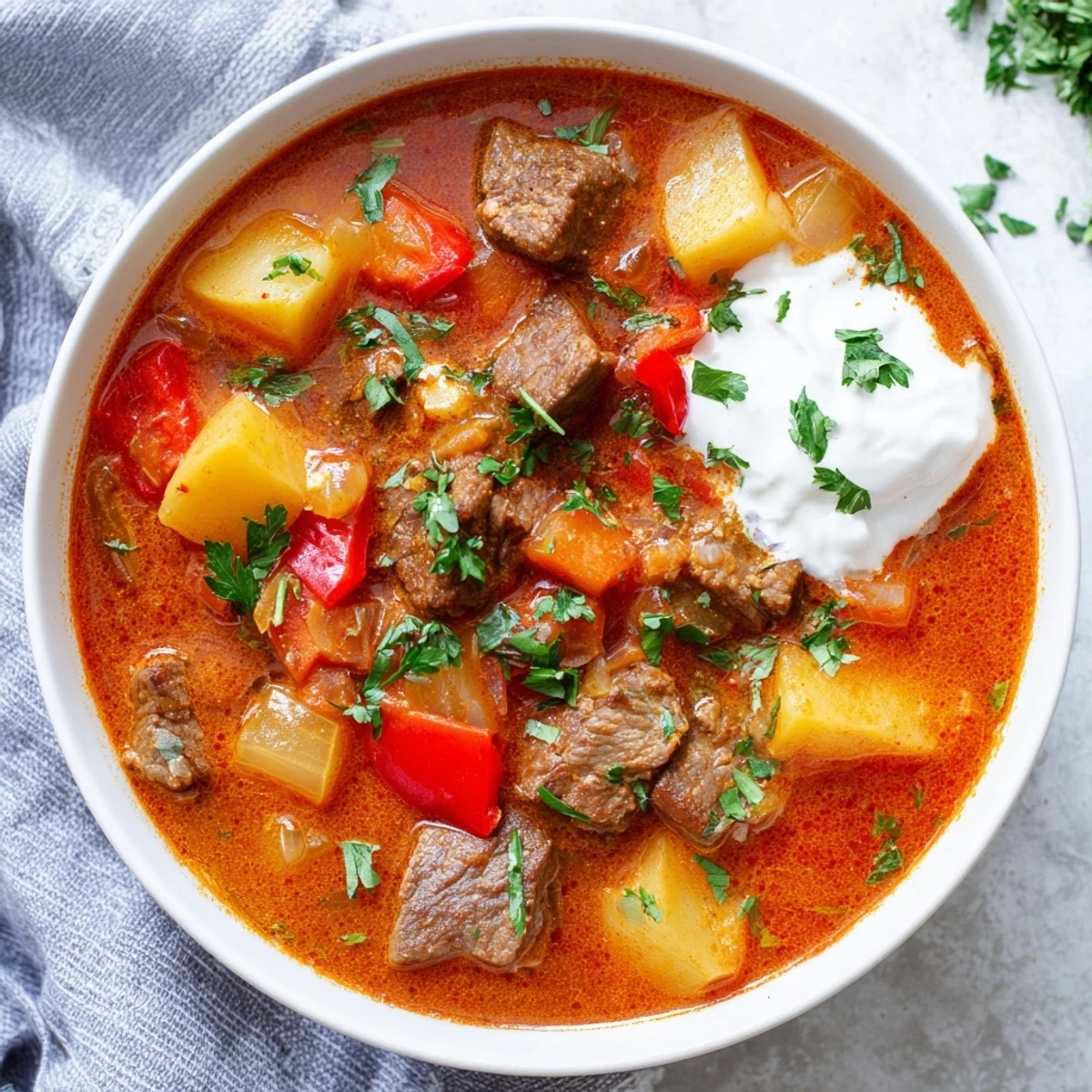
 This hearty Hungarian goulash combines tender beef chuck with sweet paprika, onions, carrots, bell peppers, and potatoes in a rich beef broth base. After searing the beef for deep flavor, everything simmers in your slow cooker for 7-8 hours until meltingly tender. The authentic Hungarian paprika provides the signature flavor, while caraway seeds and marjoram add aromatic depth. Optional cornstarch thickening creates a luscious sauce that coats every bite. Serve garnished with fresh parsley and sour cream for a comforting, satisfying meal that tastes even better the next day.
The first time I walked into a Budapest café in late autumn, the air was thick with something earthy and warm that I could not quite place. Later I learned it was sweet paprika dancing with slow-cooked beef and onions, a combination that somehow feels like a hug from inside out. Now whenever the thermometer drops below freezing, my slow cooker takes up permanent residence on the counter, working its quiet magic while I go about my day. There is nothing quite like coming home to that aroma filling every corner of the kitchen.
Last winter my neighbor stopped by unexpectedly while this was simmering away. She ended up staying for dinner and left with the recipe written on a napkin, which I think tells you everything you need to know about how this dish brings people together. Something about tender beef in that rich, paprika-spiced broth just makes conversation flow easier.
Ingredients
- Beef chuck: Chuck roast has the perfect marbling for long cooking, becoming meltingly tender while still holding its shape better than leaner cuts
- Yellow onions: They dissolve beautifully into the sauce, providing that essential sweet backbone that makes Hungarian goulash so distinctive
- Garlic: Three cloves might feel generous, but they mellow out during hours of slow cooking and become subtle rather than sharp
- Carrots: These add natural sweetness and color, plus they hold up beautifully to long cooking without turning to mush
- Red bell peppers: They bring a bright, fresh contrast to the deep flavors and contribute to that gorgeous reddish-orange hue
- Potatoes: Yukon Gold or russet work well here, becoming creamy and helping to naturally thicken the broth as they cook
- Diced tomatoes: Keep all the juices, they are crucial for building that rich, slightly tangy base
- Beef broth: A good quality broth makes a difference, but low-sodium works best so you can control the salt level yourself
- Hungarian sweet paprika: This is non-negotiable, regular paprika will give you a pale shadow of what this dish should be
- Caraway seeds: Their subtle anise flavor is the secret ingredient that makes goulash taste authentic
- Dried marjoram: Often overlooked, this herb adds a floral, woodsy note that rounds out the heavy spices
- Bay leaf: Just one contributes that background depth you notice mostly when it is missing
- Salt and black pepper: Taste at the end, as the broth reduces the salt concentration will intensify
- Tomato paste: This concentrates the tomato flavor and adds a richness that diced tomatoes alone cannot provide
- Cornstarch: Optional but perfect if you prefer a thicker, more stew-like consistency
- Fresh parsley: A bright finish that cuts through the richness and makes everything look inviting
- Sour cream: The traditional accompaniment that adds a cool, tangy contrast to each spoonful
Instructions
- Sear the beef in batches:
- Heat a large skillet over medium-high heat until it is practically smoking, then add beef cubes in a single layer without crowding the pan. Let them develop a deep, dark brown crust on at least two sides before transferring to the slow cooker, this step creates the foundation of flavor that slow cooking alone cannot achieve.
- Layer in the vegetables:
- Add the onions, garlic, carrots, bell peppers, and potatoes directly to the slow cooker on top of the seared beef, no need to cook them first. They will release their liquid as they cook, becoming part of the broth rather than remaining distinct.
- Add the liquids and seasonings:
- Pour in the diced tomatoes with all their juices and the beef broth, then sprinkle in the paprika, caraway seeds, marjoram, bay leaf, salt, pepper, and tomato paste. Give everything a thorough stir to distribute the spices evenly and ensure the tomato paste dissolves into the liquid.
- Let it cook low and slow:
- Cover and cook on low for 7 to 8 hours, or on high for 4 to 5 hours, until the beef is fork-tender and the potatoes are cooked through. Resist the urge to lift the lid, every peek adds about 15 minutes to the cooking time.
- Thicken if desired:
- For a thicker consistency, whisk together the cornstarch and cold water until smooth, then stir into the goulash. Cover and cook on high for 30 more minutes, the sauce should coat the back of a spoon.
- Finish and serve:
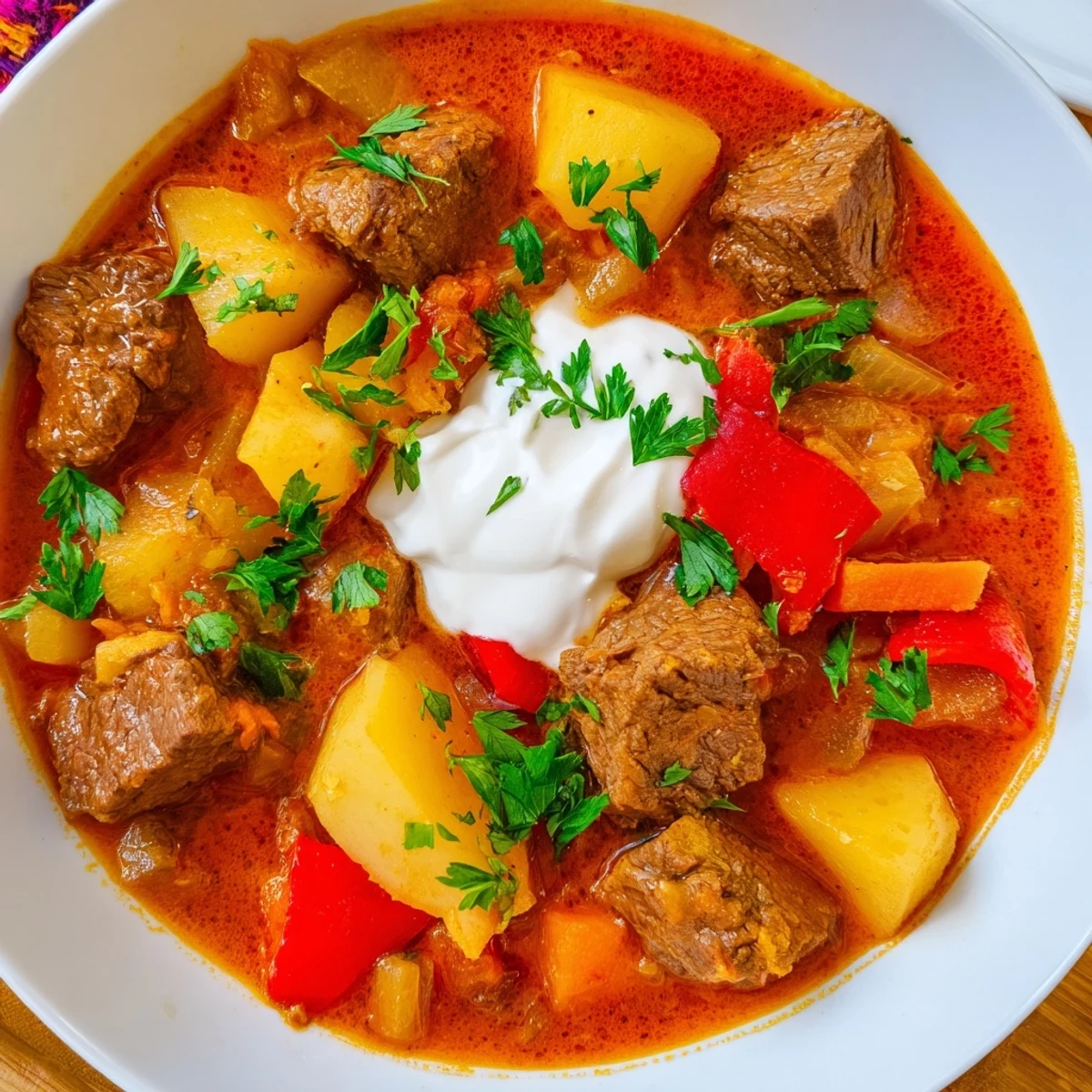
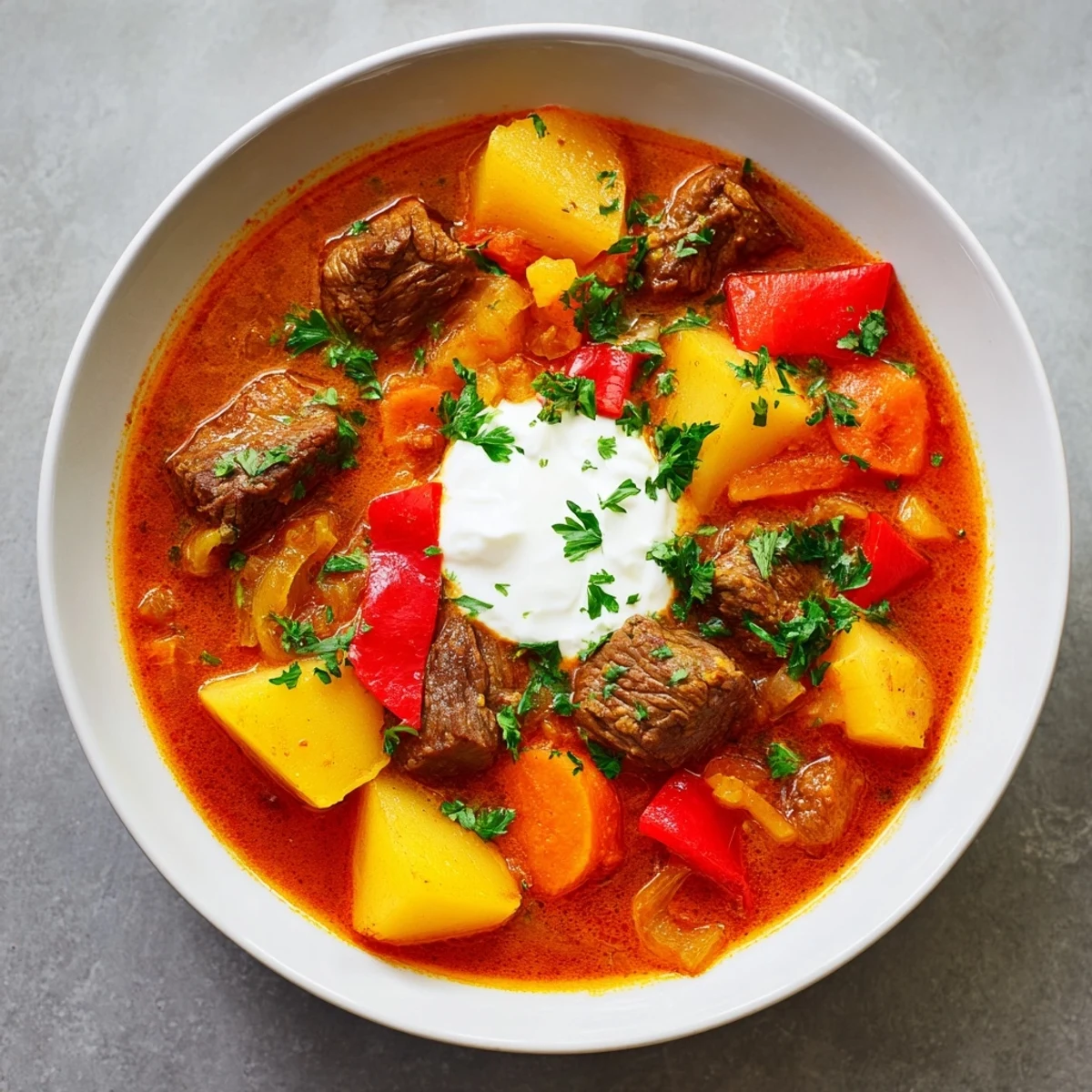
- Fish out and discard the bay leaf, then taste and add more salt or pepper if needed. Ladle into bowls and garnish with fresh parsley and a generous dollop of sour cream.
 Save to Pinterest
 My family started requesting this for Sunday dinners year-round, not just when the weather turned cold. Something about gathering around bowls of steaming goulash, dipping crusty bread into that impossibly rich broth, makes even an ordinary Sunday feel like a celebration worth remembering.
Making It Ahead
Goulash is one of those rare dishes that genuinely improves after a night in the refrigerator. The flavors have time to marry and deepen, becoming more cohesive and rounded. Make it on Sunday and you will have an even better dinner waiting for you on Monday.
Freezing Instructions
This freezes exceptionally well, portion it into airtight containers and it will keep for up to three months. Thaw overnight in the refrigerator and reheat gently on the stove, adding a splash of broth if it seems too thick. The potatoes may soften slightly but the flavor remains exactly as it should.
Serving Suggestions
Crusty bread or egg noodles are the classic accompaniment, perfect for soaking up every drop of that incredible broth. A simple green salad with a bright vinaigrette cuts through the richness beautifully. For a complete Hungarian experience, serve with spaetzle instead of noodles.
- Buttered egg noodles work wonderfully and come together quickly
- Crusty sourdough or rye bread is ideal for dunking
- A pinch of hot paprika on top adds nice heat for those who like it spicy
 Save to Pinterest
 There is something profoundly satisfying about a meal that takes care of itself while you go about your life, then rewards you with such warmth and comfort. This is the kind of cooking that feels like love.
Recipe FAQs
- → What makes Hungarian goulash authentic?
-
Authentic Hungarian goulash relies on high-quality Hungarian sweet paprika as the primary seasoning. This specific paprika delivers the signature deep red color and sweet, mild flavor that defines traditional goulash. Caraway seeds and marjoram are also essential spices that provide the characteristic aromatic profile.
- → Can I make this without searing the beef first?
-
While you can skip the searing step, browning the beef cubes in batches before slow cooking creates deeper, richer flavors through the Maillard reaction. This extra step takes about 10-15 minutes and significantly enhances the final taste of your goulash.
- → How long does goulash last in the refrigerator?
-
Goulash stores beautifully and actually improves in flavor after a day or two. Keep it refrigerated in an airtight container for up to 4-5 days. The flavors continue to meld and develop, making leftovers even more delicious than the freshly made dish.
- → Can I freeze Hungarian goulash?
-
Yes, goulash freezes exceptionally well. Cool completely before transferring to freezer-safe containers. It will keep for up to 3 months in the freezer. Thaw overnight in the refrigerator and reheat gently on the stovetet, adding a splash of broth if needed to restore consistency.
- → What should I serve with goulash?
-
Traditional serving options include crusty bread for soaking up the rich sauce, buttered egg noodles, or spaetzle. A dollop of sour cream adds creaminess and balances the paprika. For a complete meal, serve with a simple green salad or pickled vegetables on the side.
- → Can I make this on the stovetop instead?
-
Yes, cook in a large Dutch oven over low heat for 2-3 hours instead of using a slow cooker. Maintain a gentle simmer and stir occasionally. The beef should become fork-tender and the sauce should thicken naturally. Add more broth if needed during cooking.