
 Save to Pinterest
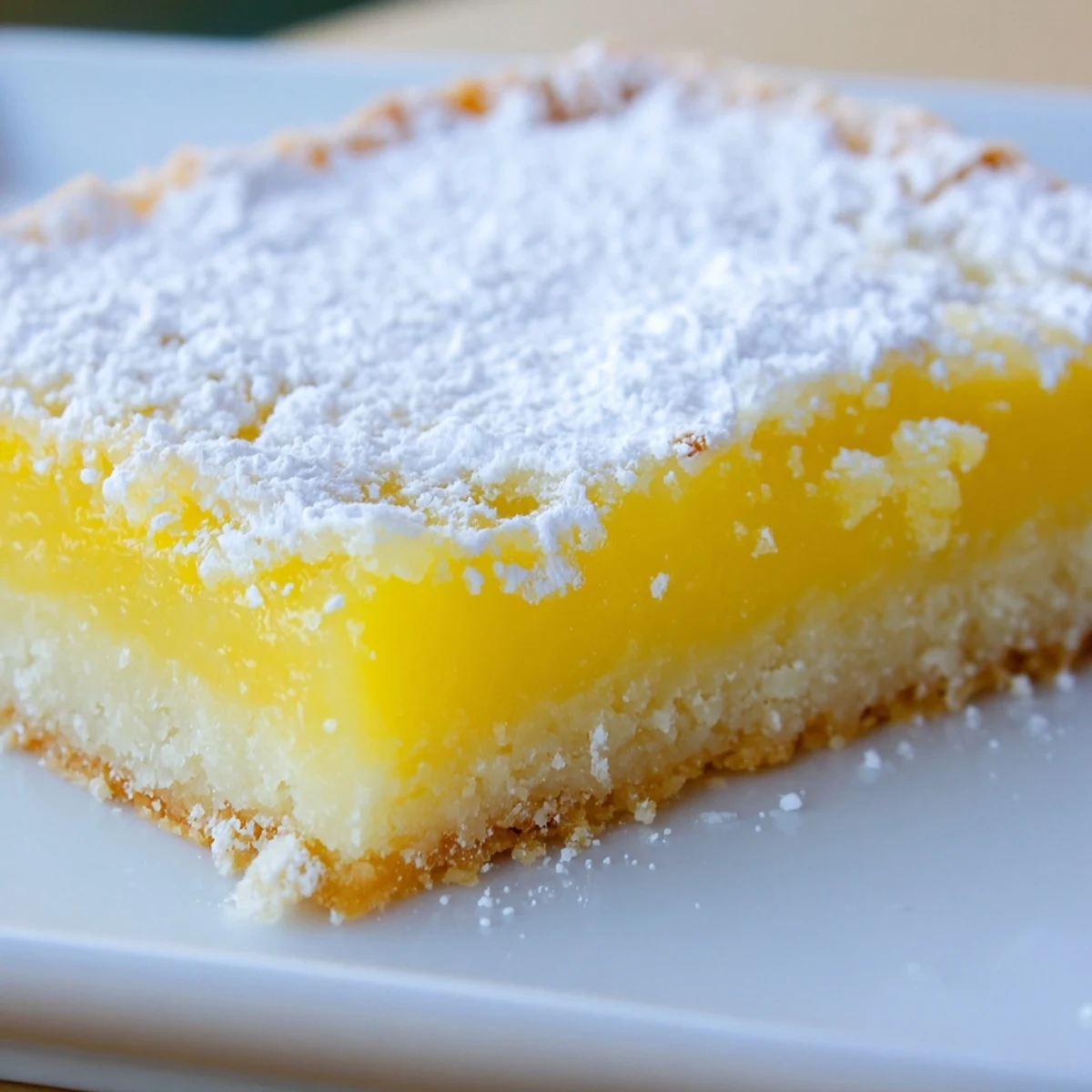
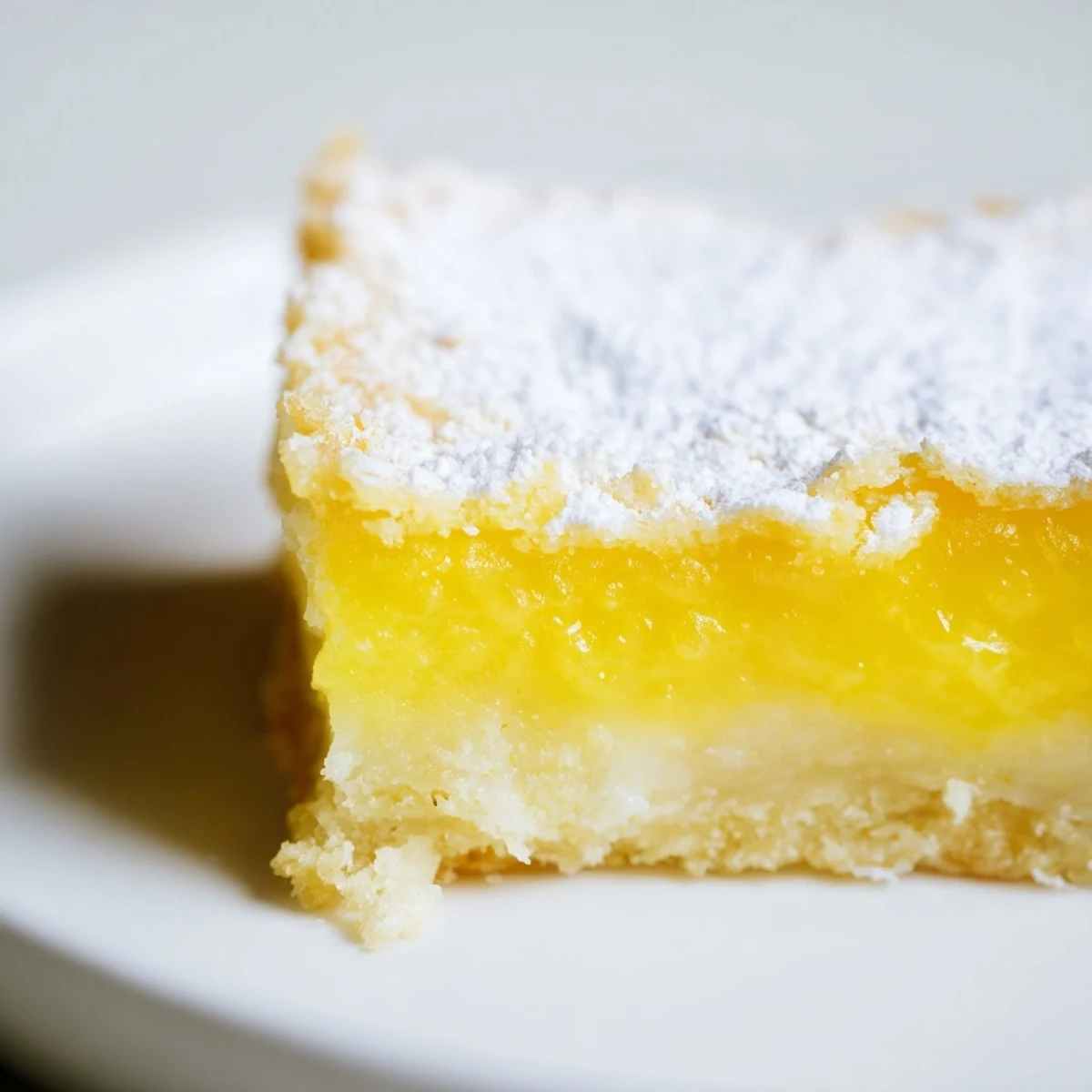
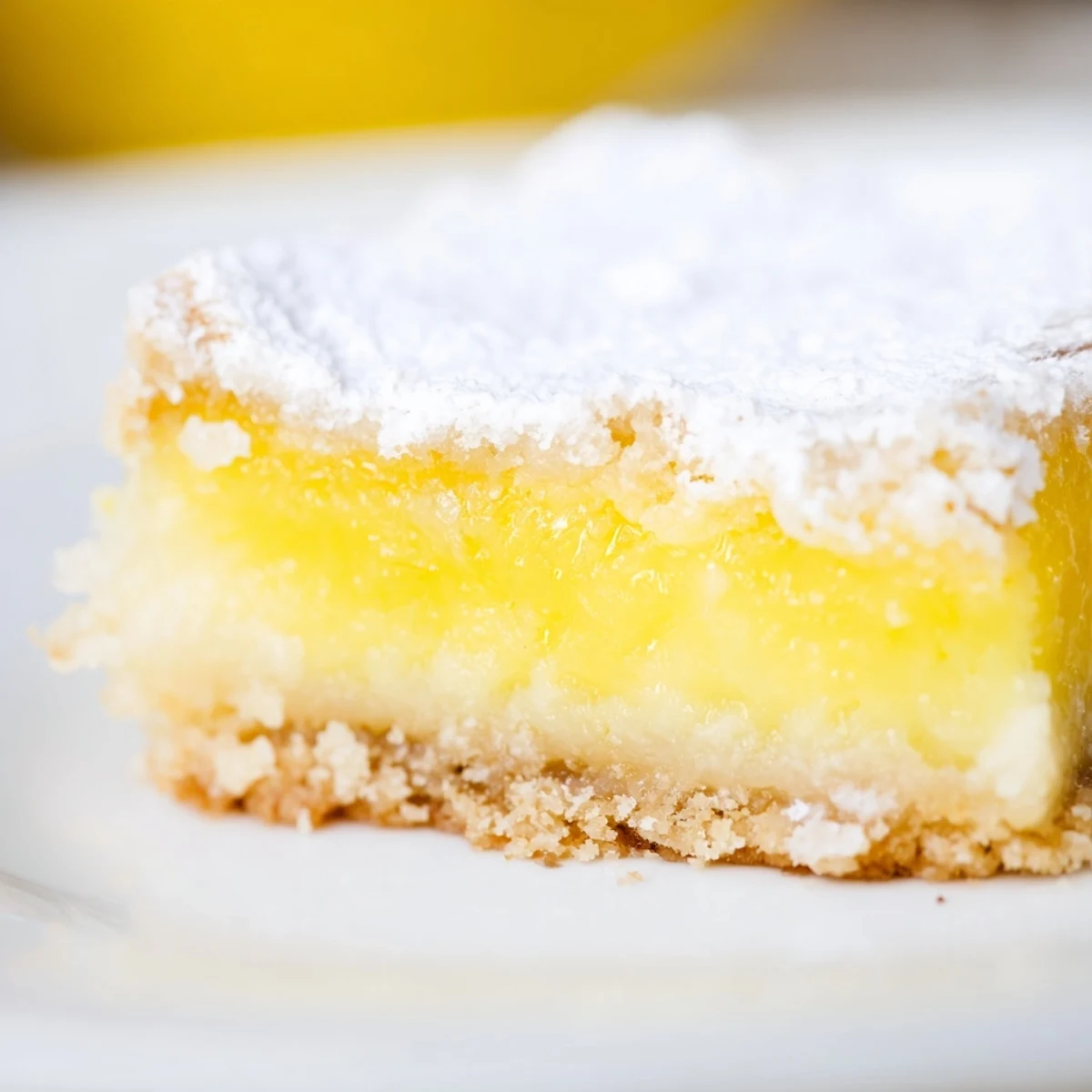
 These bright and tangy lemon bars feature a buttery shortbread crust with a smooth, sweet lemon filling. The crust is baked until golden, then topped with a fresh lemon mixture and baked again until set. Once cooled, bars are dusted with powdered sugar for a delicate finish. Simple to prepare and perfect for a sweet treat, these bars offer a balance of citrus zest and creamy texture, making them an easy delight for any gathering.
There's something about the smell of lemon zest hitting hot butter that makes a kitchen feel suddenly alive. I discovered these bars by accident one summer when I had three lemons rolling around in my fruit bowl and a craving for something both bright and indulgent. The first batch came out slightly underbaked because I was impatient, but that mistake taught me something valuable—the custard-like filling is supposed to jiggle just a little when it comes out of the oven. Now I make them whenever I need to feel like I'm sitting at a friend's table instead of cooking alone.
I brought these to a book club once where nobody knew each other very well, and by the third bite, conversation just started happening naturally. There's something disarming about lemon—it cuts through awkwardness and makes people relax. My friend Sarah asked for the recipe that night, and now she makes them for her kids' school events, which somehow made me feel proud in a way I didn't expect.
Ingredients
- Unsalted butter (1 cup, softened): The foundation of everything good here—softening it at room temperature means the crust will actually cream instead of just getting mixed into a lumpy mess.
- Granulated sugar (1 1/2 cups total): Split between the crust and filling, it sweetens without overpowering the lemon brightness.
- All-purpose flour (2 1/4 cups total): Use fresh flour if you can—old flour makes the crust taste slightly stale.
- Fresh lemon juice (2/3 cup): Bottled juice tastes flat and chemical; fresh is worth the squeeze, trust me.
- Lemon zest (from 2 lemons): This is where the personality lives—a microplane gets the most flavorful yellow bits without the bitter white pith.
- Eggs (4 large): They're what transforms the filling from liquid to custard, so use fresh ones at room temperature.
- Salt (1/4 teaspoon): Just enough to make the buttery crust taste like butter, not like shortbread.
- Powdered sugar (for topping): Dust it on right before serving so it doesn't dissolve into a sticky mess.
Instructions
- Get your oven ready and line the pan:
- Preheat to 350°F and line a 9x13-inch pan with parchment paper, leaving a little overhang on two sides so you can lift the whole thing out later without breaking it apart.
- Make the shortbread base:
- Cream softened butter with 1/2 cup sugar until it's pale and fluffy—this usually takes 2-3 minutes with an electric mixer. Add flour and salt and mix just until it comes together; don't overwork it or the crust gets tough. Press it evenly across the bottom of your pan, getting into the corners.
- Pre-bake the crust:
- Bake for 18-20 minutes until it's light golden and set but not brown. You want it sturdy enough to hold the filling without being crispy.
- Make the lemon custard filling:
- While the crust bakes, whisk together 1 1/2 cups sugar, 1/4 cup flour, 4 eggs, lemon juice, and zest in a bowl until completely smooth. Don't skip the whisking—lumpy filling turns into grainy bars.
- Layer and bake again:
- Pour the filling over the hot crust as soon as it comes out (the heat helps it set properly), then bake for 15-18 minutes until the center jiggles just slightly when you shake the pan. It will firm up as it cools.
- Cool completely before cutting:
- Let the whole pan cool on a wire rack, then refrigerate for at least an hour before lifting it out and cutting into squares. Cold bars cut cleaner and taste tangier.
- Dust and serve:
- Right before serving, dust generously with powdered sugar so it stays white and doesn't get absorbed.
 Save to Pinterest
 The first time someone told me these bars reminded them of a specific moment in their own kitchen—their grandmother's counter, summer afternoons, the sound of ice clinking in lemonade—I realized that food is just memory shaped into something you can share. That's when these stopped being a recipe and became something I actually cared about making well.
Why Fresh Lemon Matters So Much
The difference between fresh lemon juice and the bottled kind is the difference between tasting sunshine and tasting chemistry. Fresh juice has brightness and dimension that bottled just can't match, plus the zest carries floral and citrus notes that make the whole filling sing. I learned this the hard way after making a batch with concentrate and wondering why nobody asked for seconds.
The Crust-to-Filling Ratio That Works
A thick, buttery crust anchors the tang of the filling and keeps these from feeling too sharp or one-note. The shortbread acts like a flavor bridge, so you get richness and brightness in every bite instead of just puckering at the lemon. I used to go lighter on the crust before I realized that the balance is what makes people come back for thirds.
Storage and Make-Ahead Notes
These bars actually taste better the next day once the flavors have had time to meld and settle. You can bake them up to three days ahead and keep them in an airtight container in the refrigerator, pulling them out a few minutes before serving so they're not quite so cold.
- They freeze beautifully for up to two months if you wrap them individually in plastic wrap first.
- Dust with powdered sugar only right before serving, or it'll absorb into the filling and disappear.
- Room temperature tastes better than cold, so take them out of the fridge 15 minutes before your guests arrive.
 Save to Pinterest
 These bars have a way of turning an ordinary afternoon into something worth remembering. Make them when you want to feel like you've given your people something thoughtful.
Recipe FAQs
- → What type of citrus is used for the filling?
-
Fresh lemon juice and lemon zest provide a bright and tangy flavor to the filling.
- → How is the shortbread crust prepared?
-
The crust is made by creaming unsalted butter and sugar, then mixing in flour and salt before pressing into the pan and baking until golden.
- → Can these bars be made gluten-free?
-
Yes, substitute the all-purpose flour with a 1:1 gluten-free flour blend for a gluten-free option.
- → What texture should the filling have after baking?
-
The filling should be just set and no longer jiggly in the center once baked.
- → How should the bars be stored after baking?
-
Store bars in an airtight container in the refrigerator for up to 4 days to maintain freshness.