
 Save to Pinterest
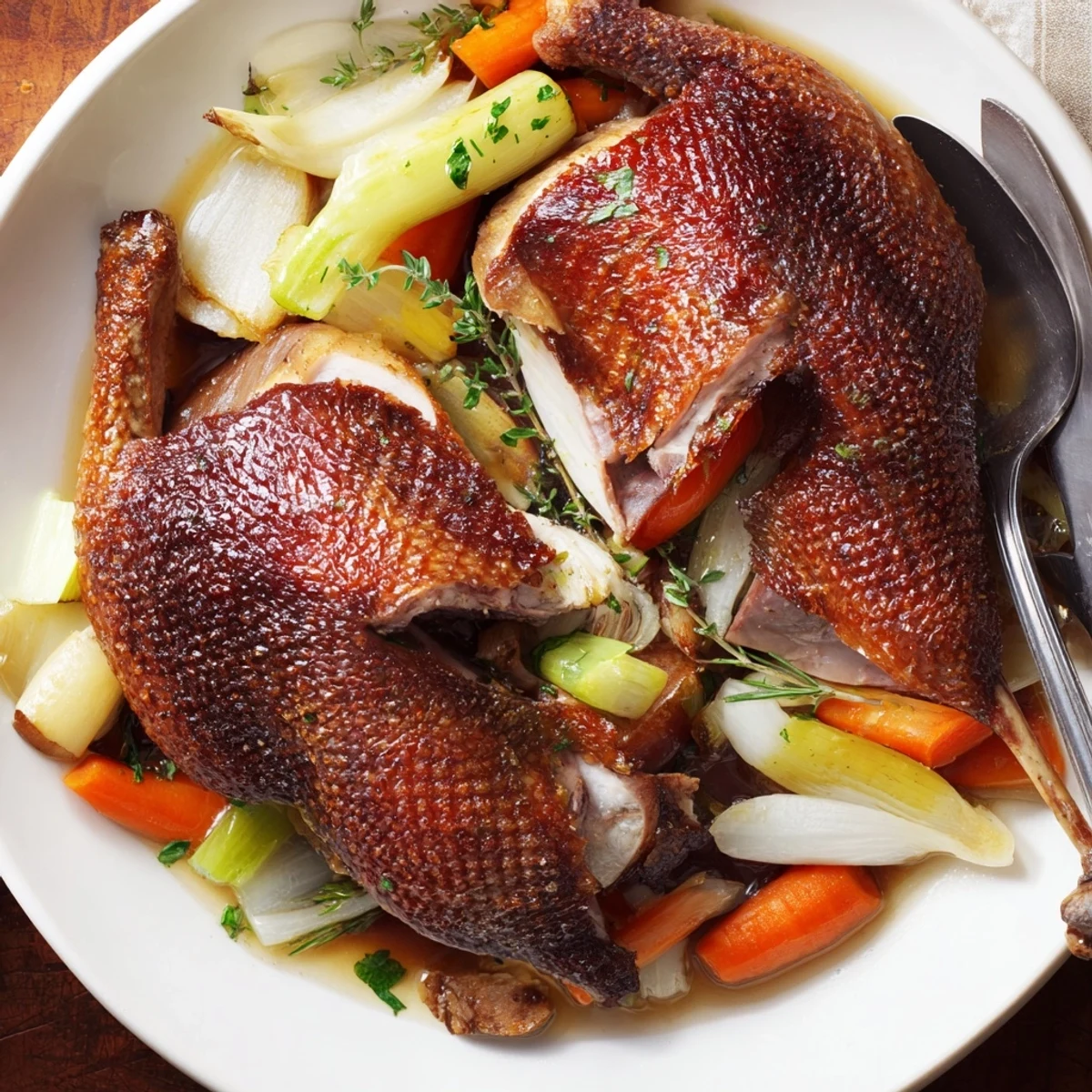
 This method yields a succulent whole duck with crisped skin and deeply flavored braised vegetables. Sear the bird to render fat, sauté carrots, parsnips, leeks and garlic, deglaze with white wine, then nestle the duck atop the vegetables and braise in stock with thyme, rosemary and bay. Finish uncovered at high heat to crisp the skin, rest 10 minutes and carve.
The exhaust fan in my tiny apartment kitchen could barely keep up the night I decided to braise a whole duck for the first time. Fat sputtered and popped against the sides of my Dutch oven like tiny fireworks, and my cat sat on the counter watching with an intensity I have never seen before or since. That duck turned out imperfect, slightly overcooked in the legs and underseasoned in the breast, but the vegetables underneath had soaked up so much richness that I kept eating them straight from the pot with a wooden spoon.
A close friend once told me that duck was too fussy for a Tuesday dinner, so naturally I made this the following Tuesday just to prove a point. We ate at the kitchen counter with napkins instead of plates, tearing pieces of duck off the bone and passing the pot of vegetables back and forth. Neither of us said much, which is honestly the highest compliment a meal can receive.
Ingredients
- Whole duck (4 to 5 lbs), trimmed: Ask your butcher to remove excess fat pads, or do it yourself with sharp kitchen shears at home.
- Kosher salt and black pepper: Season more aggressively than you think, especially inside the cavity where flavor often gets lost.
- Carrots, parsnips, leeks, onion, celery, and garlic: Cut them into hearty chunks, not dainty pieces, because they need to hold their shape through a long braise.
- Olive oil: Just a couple of tablespoons to get the sear started before the duck releases its own copious fat.
- Dry white wine: Something you would drink on its own, because the reduction concentrates every note of it.
- Low sodium chicken stock, thyme, rosemary, and bay leaf: These build the braising liquid into something that tastes like it simmered for twice as long.
- Fresh parsley (optional): A scatter of green at the end cuts through the richness with welcome freshness.
Instructions
- Preheat and prepare:
- Set your oven to 350F and give it time to fully come to temperature while you prep the duck.
- Dry and season the duck:
- Pat the bird obsessively dry with paper towels, then season it all over and inside the cavity with salt and pepper.
- Sear the duck:
- Heat olive oil in a large Dutch oven over medium high heat, then place the duck breast side down and let it sit undisturbed for 5 to 7 minutes until the skin is deeply golden and crisp before turning to brown the other side.
- Drain the fat and sauté the vegetables:
- Pour off all but two tablespoons of rendered fat, then add all your chopped vegetables and garlic, cooking until they take on some color and smell incredible.
- Deglaze with wine:
- Pour in the white wine and scrape up every last browned bit from the bottom of the pot, letting the liquid reduce by half.
- Build the braise:
- Nestle the duck on top of the vegetables, pour in the stock, tuck in the herbs, cover tightly, and slide it into the oven for 1 and a half hours, basting the duck with juices halfway through.
- Crisp the skin:
- Remove the lid, crank the heat to 425F, and roast uncovered for 20 more minutes until the skin blisters and crackles.
- Rest and serve:
- Let the duck rest for 10 minutes before carving, then serve it over the braised vegetables with plenty of the cooking juices spooned on top.
 Save to Pinterest
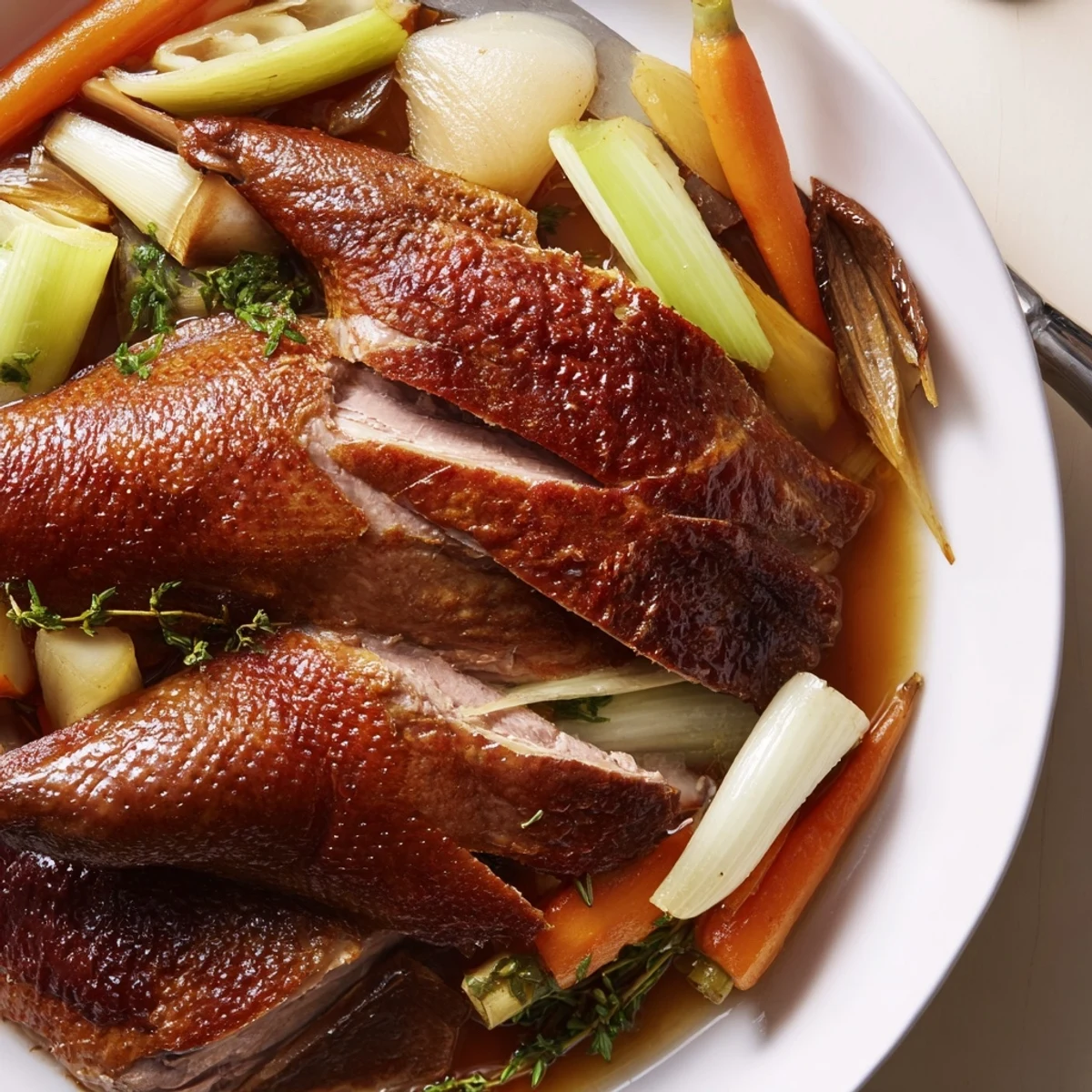
 Somewhere between the second glass of wine and the moment I finally carved into that crackling skin, I understood why people save duck for special occasions. It demands patience and attention, but rewards you with a kind of deep, savory satisfaction that no weeknight chicken can replicate.
Choosing the Right Wine for Braising
A Loire Valley Chenin Blanc is my go to here because it has enough acidity to cut through the richness of the duck without overpowering the herbs. A light Pinot Noir works beautifully too if you prefer a red wine braise, lending a slightly deeper, earthier character to the finished dish.
Making It Your Own With Seasonal Vegetables
Root vegetables are endlessly forgiving in a braise, so swap freely based on what looks good at the market. Turnips, rutabaga, sweet potatoes, and even chunks of butternut squash all work beautifully, just keep the pieces roughly the same size so everything cooks evenly.
Getting That Skin Impossibly Crispy
The secret is really a two stage process: render slowly under the covered braise, then blast with high dry heat at the end. If you want to go even further, parboil the duck for a few minutes before seasoning, which tightens the skin and helps it render fat more efficiently during the braise.
- Dry the duck one final time with paper towels right before it goes into the hot pot for the initial sear.
- Make sure the Dutch oven lid fits tightly so no steam escapes during the covered portion of cooking.
- Let the duck rest properly before carving or you will lose all those beautiful juices onto the cutting board.
 Save to Pinterest
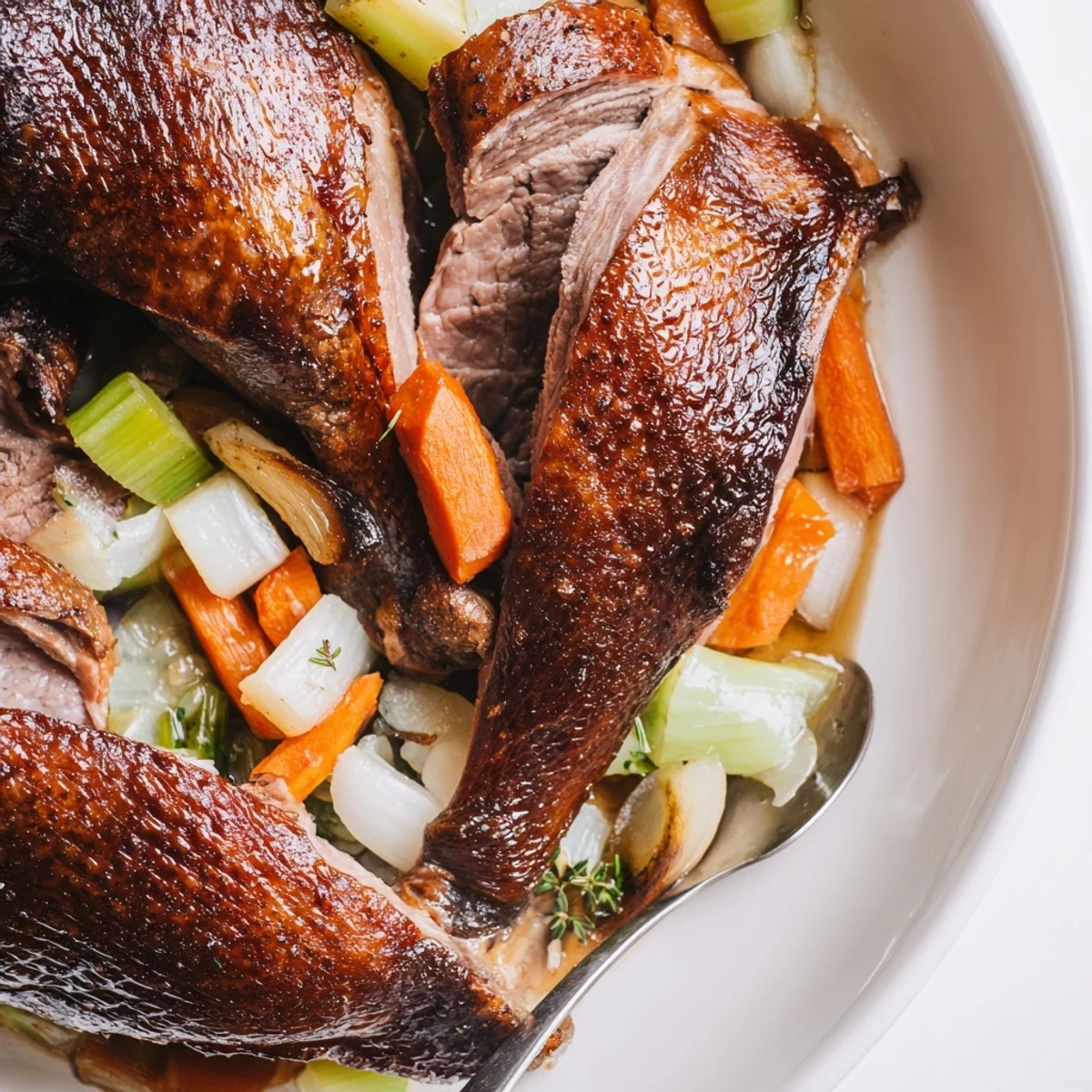
 There is something deeply satisfying about cooking a whole duck, the way it fills the kitchen with warmth and turns an ordinary evening into something worth remembering. Share it with someone who appreciates the quiet magic of a meal that asks for nothing but time and a good appetite.
Recipe FAQs
- → How do I get the skin extra crispy?
-
Render as much fat as possible by starting the bird breast-side down to brown, then roast uncovered at high heat at the end. Pat the skin dry and season well before searing to promote browning and crisping.
- → Is parboiling the duck necessary?
-
Parboiling is optional but helps tighten the skin and remove excess surface fat. A brief blanching of a few minutes before searing can improve final crispness.
- → What vegetables work best for braising with the bird?
-
Root vegetables like carrots, parsnips and firm aromatics such as leeks and onion hold up well. They add sweetness and body to the cooking juices and provide a hearty bed for the duck.
- → Can I substitute the wine for something else?
-
If you prefer no wine, use an equal amount of additional stock or a splash of apple cider for acidity. The key is a deglazing liquid to lift browned bits for richer pan juices.
- → How long should the duck rest before carving?
-
Rest the bird for at least 10 minutes after roasting to allow juices to redistribute. This yields a moister carve and cleaner slices.
- → How can I lighten the dish for a leaner finish?
-
Render and discard excess fat after searing, braid with low-sodium stock, and use a lighter wine. Roasting at high heat briefly concentrates flavor without adding more fat.